
 By Admin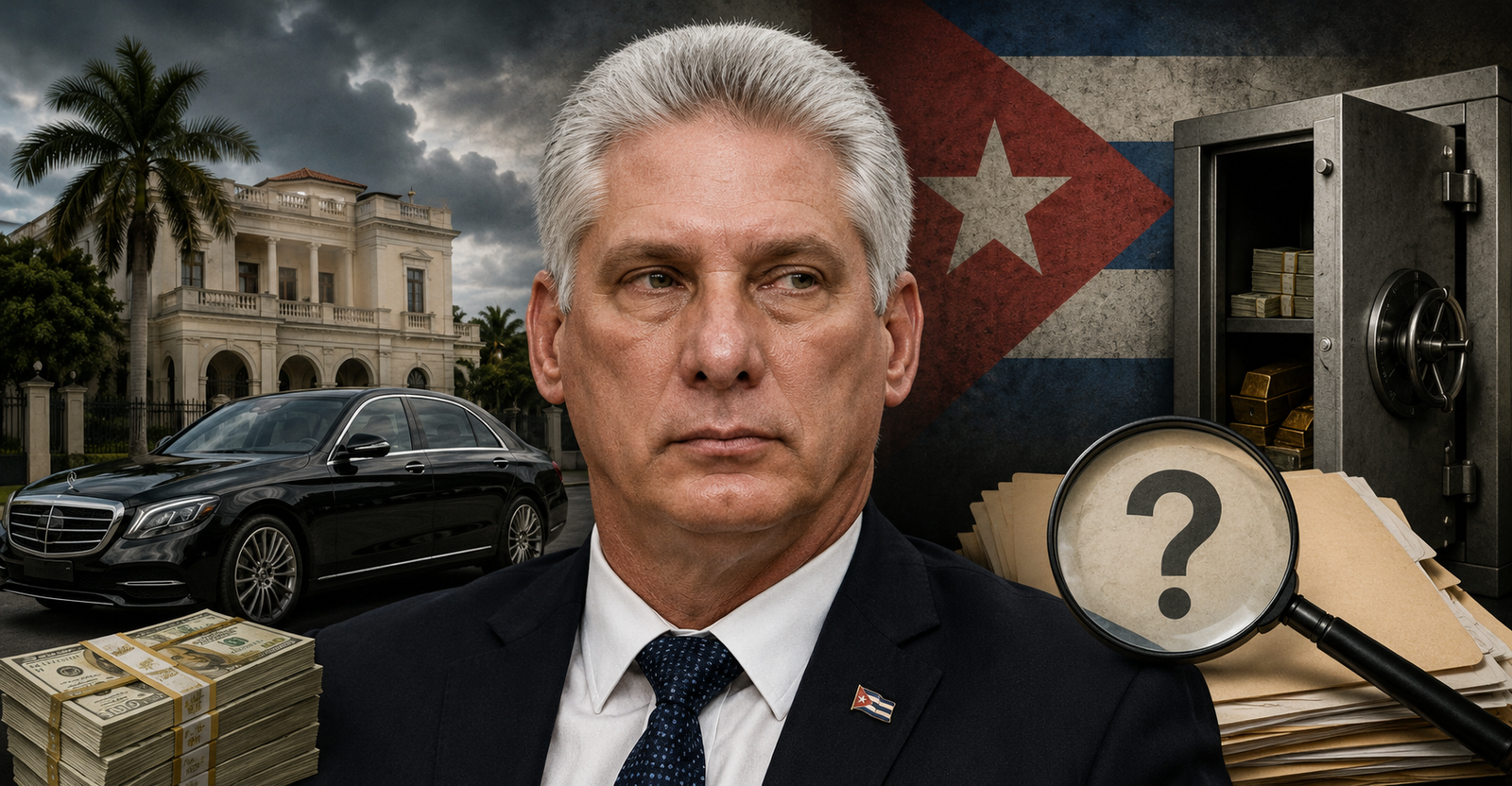
Miguel Díaz-Canel net worth is not officially disclosed, which is why the topic attracts so much curiosity. Unlike business leaders or public company executives, Díaz-Canel does not have a clear public financial filing that shows his assets, salary, property, investments, or bank accounts. Because of that, any exact net worth number online should be treated carefully.
Some websites publish large estimates about Miguel Díaz-Canel’s wealth, but those figures are not supported by clear official asset disclosures. The safer and more accurate answer is that his personal net worth remains unverified. What can be discussed with more confidence is his long political career, his position at the top of Cuba’s one-party system, and the lack of transparency that surrounds money and power inside the Cuban state.
As President of Cuba and First Secretary of the Communist Party of Cuba, Miguel Díaz-Canel holds the country’s two most important political roles. That makes his financial life a matter of public interest, especially because Cuba is facing economic hardship, shortages, inflation, migration pressure, and public frustration.
Miguel Díaz-Canel, full name Miguel Mario Díaz-Canel Bermúdez, is a Cuban politician, engineer, and the current President of Cuba. He was born on April 20, 1960, in Villa Clara province, and studied electrical engineering at the Central University “Marta Abreu” of Las Villas in Santa Clara. Before rising to national leadership, he taught engineering and became active in the Young Communist League.
His career was built inside the structures of the Communist Party of Cuba, not through private business. He became a provincial party leader in Villa Clara, later served in Holguín, joined the Politburo, became Minister of Higher Education, then moved into senior government roles before becoming Cuba’s national leader.
This background matters because Miguel Díaz-Canel net worth cannot be understood the same way as a celebrity, entrepreneur, or corporate executive. His public profile is tied to political office, state institutions, and party leadership.
Díaz-Canel did not come from the original revolutionary generation that fought alongside Fidel Castro and Raúl Castro. He was born after the 1959 Cuban Revolution, which made his rise symbolically important. Britannica describes him as the first person since the revolution not named Castro to hold either of Cuba’s leading posts.
He became president of the Council of State and Council of Ministers in 2018 after Raúl Castro stepped down from that position. After Cuba’s 2019 constitutional changes, he assumed the recreated office of President of the Republic. In 2021, he became First Secretary of the Communist Party of Cuba, replacing Raúl Castro as party chief.
That 2021 transition was historic because it formally ended six decades of direct Castro family leadership at the very top of the Cuban political system. Still, Reuters reported that Díaz-Canel emphasized continuity and said Raúl Castro would continue to be consulted on major strategic decisions.
The biggest challenge with Miguel Díaz-Canel net worth is the lack of reliable public financial information. A true net worth figure would require details about personal assets, savings, property, investments, debts, and income. Those details are not publicly available in a clear, verifiable way.
That means readers should be careful with articles that claim a precise fortune. A net worth estimate is only useful when the method is clear. With Díaz-Canel, most online numbers do not explain where the money supposedly comes from, what documents support the claim, or how personal wealth is separated from state power.
This distinction is important. A political leader may control or influence state institutions, but that does not automatically mean state money is personal wealth. Cuba’s political economy is complex, and confusing government control with private ownership can lead to misleading claims.
One reason people search for Miguel Díaz-Canel salary or Cuba president salary is that they want a simple number. But salary information for top Cuban officials is not as transparent or regularly discussed as salaries for leaders in some other countries.
In many countries, elected officials publish salary schedules, tax returns, or asset declarations. In Cuba, public access to that kind of personal financial data is limited. That makes it difficult to say how much Díaz-Canel personally earns each year, beyond general assumptions about government pay and official privileges.
Even if his official salary were known, salary would not equal net worth. Net worth also depends on assets, debts, savings, property, pensions, benefits, and other financial holdings. For Miguel Díaz-Canel, those details remain unclear.
Wealth questions around Cuban leaders are difficult because Cuba’s economy includes state enterprises, military-linked businesses, hard-currency stores, tourism revenue, remittances, and limited public financial reporting. The boundaries between state power, party influence, and economic control are not always easy for outsiders to see.
This is why the topic goes beyond Díaz-Canel as an individual. People searching his net worth are often asking a larger question: how does money work inside a political system where the ruling party controls the state and where major economic sectors are not fully transparent?
That lack of transparency has made Cuban leader wealth a recurring topic, especially in exile media, opposition commentary, and international reporting.
One of the most important names in discussions about Cuban economic opacity is GAESA, officially Grupo de Administración Empresarial S.A. It is widely described as a military-linked business conglomerate with influence across major parts of the Cuban economy.
A Miami Herald investigation based on leaked documents reported that GAESA’s businesses paid no taxes on dollar sales and no taxes on profits in foreign or peso currencies, and that the conglomerate’s financial statements underreported its net worth in relation to its dollar holdings. The report also said applying a standard assets-minus-liabilities calculation would put GAESA at about $13 billion plus 28 billion pesos, separate from Cimex.
This matters for the Miguel Díaz-Canel net worth topic because it helps explain why Cuban financial questions are so hard to answer. However, it is important not to confuse GAESA’s finances with Díaz-Canel’s personal wealth. State-controlled or military-controlled assets are not the same thing as a president’s private bank account unless there is evidence of direct ownership.
Reporting on GAESA also points to a broader issue: economic power in Cuba can sit inside institutions that are not easy for ordinary citizens or outside observers to audit. A tourism analysis summarizing Miami Herald reporting said GAESA’s finances are more opaque because several companies are registered abroad, and it described a parallel economy tied to foreign currency, remittances, and military-linked entities.
This kind of reporting does not prove Miguel Díaz-Canel has a specific personal fortune. What it does show is why questions about leadership wealth in Cuba often become difficult, controversial, and politically charged.
When a country has limited transparency around powerful institutions, people naturally ask whether top officials personally benefit from the system. But responsible writing should separate suspicion, criticism, and verified evidence.
The interest in Miguel Díaz-Canel net worth is also tied to the daily reality faced by many Cubans. Reuters reported that nationwide protests in 2021 erupted amid shortages of basic goods, demands for political rights, and Cuba’s worst coronavirus outbreak at that time. The government blamed the unrest largely on economic hardship linked to U.S. sanctions and outside forces.
That context is important. When ordinary people face shortages and economic pressure, questions about the wealth of political leaders become more intense. Even unverified claims can spread quickly because people are looking for explanations for inequality, privilege, and state secrecy.
For that reason, an article about Díaz-Canel’s finances should be careful but not dismissive. The public interest is real, even if the exact net worth number is not available.
Another reason this topic appears in search results is the public debate around luxury items, including claims about watches allegedly worn by Díaz-Canel. These discussions often compare visible symbols of wealth with the average living conditions of ordinary Cubans.
Such claims should be handled cautiously. A photo or social media post does not prove net worth. It may raise questions about image, privilege, and political optics, but it cannot replace financial records.
The better approach is to treat luxury watch discussions as a sign of public scrutiny, not as verified evidence of personal wealth. In a country with economic strain, even small signs of elite comfort can attract strong criticism.
A major reason Miguel Díaz-Canel net worth is different from celebrity or billionaire searches is that his power comes from political position, not public entrepreneurship. He is not known for founding a company, owning a global brand, investing in public stocks, or building a private business empire.
His influence comes from his role as President of Cuba, First Secretary of the Communist Party, and senior figure in the Cuban state. That gives him enormous political importance, but it does not automatically provide a clear personal wealth figure.
This is why the keyword should be handled as a public accountability topic rather than a standard wealth profile.
Here is what can be said with confidence:
Miguel Díaz-Canel is the current President of Cuba and First Secretary of the Communist Party of Cuba.
He rose through the Cuban party system after working as an engineer, professor, provincial party leader, Minister of Higher Education, vice president, and president.
His exact net worth is not publicly verified through clear asset disclosures or personal financial filings.
Cuba’s wider economic structure includes opaque state and military-linked business networks, including GAESA, which has been the subject of investigative reporting.
Those facts give readers a more honest picture than a random dollar estimate.
Miguel Díaz-Canel’s finances attract attention because he leads a country where economic hardship is a daily issue and where state transparency is limited. People want to know whether the president lives under the same economic conditions as ordinary citizens or benefits from privileges hidden from public view.
That question is not unique to Cuba. People ask similar questions about leaders in many countries with limited asset disclosure, weak press freedom, or powerful state-controlled companies. But in Cuba, the question feels especially sensitive because the country’s official political identity is built around socialism, equality, and public sacrifice.
That is why the net worth question becomes more than personal curiosity. It becomes a question about trust, transparency, and accountability.
The most accurate answer to Miguel Díaz-Canel net worth is that it is unknown and not officially verified. Any exact number should be treated as speculative unless supported by credible documentation.
What is clear is that Díaz-Canel holds the highest political offices in Cuba, inherited leadership from the post-Castro transition, and governs within a system where financial transparency is limited. Reporting on GAESA and Cuba’s military-linked economy helps explain why the public struggles to separate personal wealth, official privilege, and state-controlled money.So instead of asking only how much Miguel Díaz-Canel is worth, the better question is why the answer is so difficult to confirm. In that difficulty lies the real story: a powerful leader, an opaque economy, and a public that has few clear ways to verify the finances of those at the top.