
 By Admin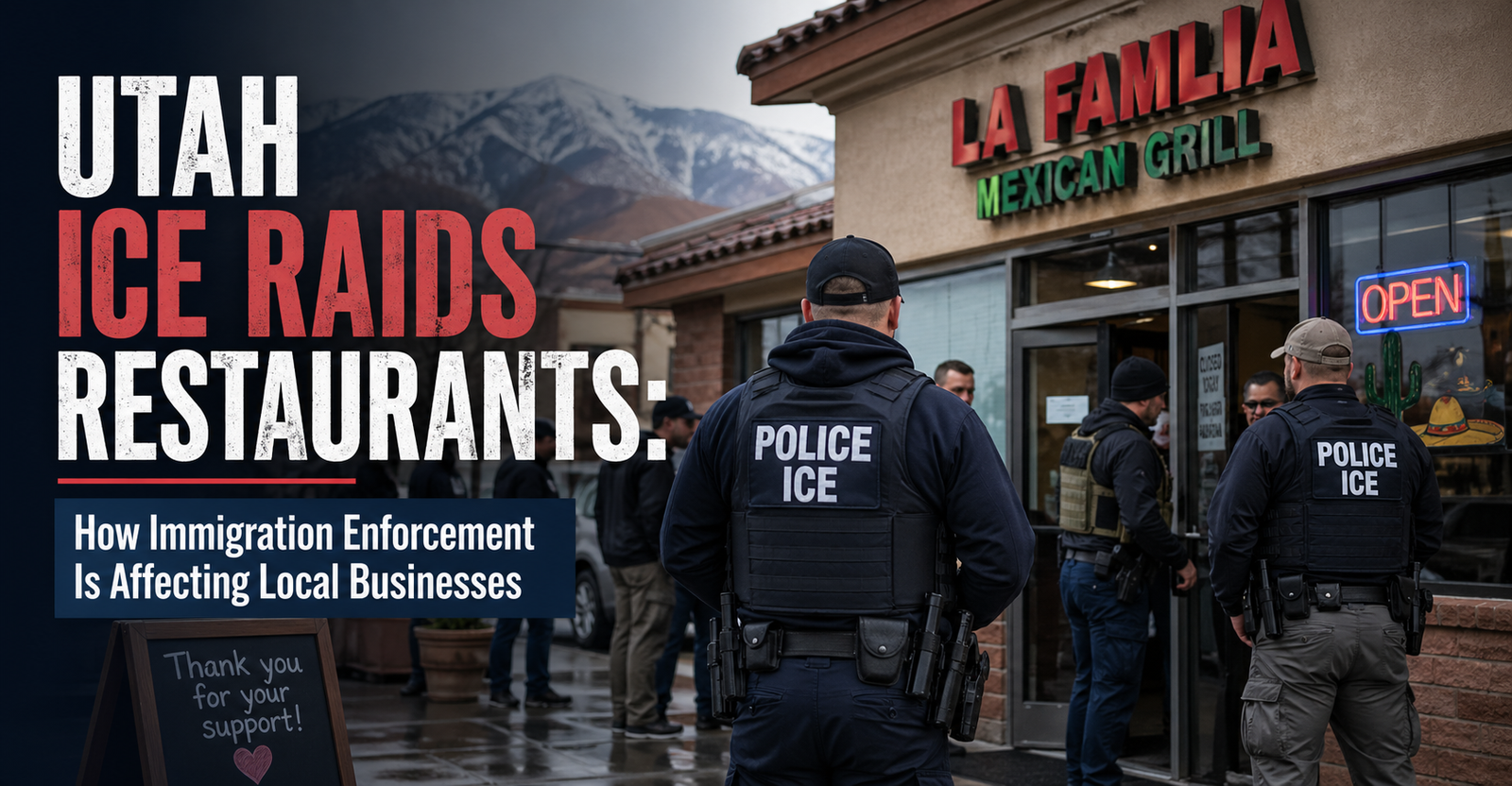
The phrase Utah ICE raids restaurants has become more than a news headline. For many local business owners, workers, and families, it points to a real climate of fear, uncertainty, and disruption. Even when an immigration raid does not happen inside a restaurant, the fear of one can still affect who shows up for work, how long a kitchen can stay open, and how comfortable customers feel walking into certain businesses.
Across Utah, especially in places like Salt Lake City, Bountiful, and the wider Wasatch Front, immigration enforcement has become a major concern for parts of the restaurant and hospitality industry. Local restaurants depend on cooks, dishwashers, prep workers, servers, hosts, cleaners, and delivery support. When workers are afraid of ICE activity, traffic stops, home arrests, or fake raid threats, the effects can move quickly through a business.
This is not only an immigration story. It is also a small business story, a labor story, and a community story.
The issue around Utah ICE raids restaurants is not always about federal agents entering dining rooms or kitchens. In many cases, the bigger impact comes from fear of enforcement. Workers may miss shifts. Owners may struggle to fill schedules. Families may avoid public places. Customers may hear rumors and stay away.
For restaurants, even one short-staffed day can be serious. A busy kitchen needs people in place. If a line cook, dishwasher, prep cook, or server does not come in, the whole operation feels it. Food takes longer. Customers wait more. Managers have to cover gaps. Some restaurants may shorten hours or cut menu items for the day.
That is why immigration enforcement can affect restaurants even without a direct workplace raid. Fear alone can interrupt the rhythm of a local business.
The restaurant industry runs on people. Behind every plate of food is a team doing fast, physical, and often underappreciated work.
In Utah restaurants, many essential jobs are in the back of the house. These include dishwashers, line cooks, prep cooks, cleaning staff, and other kitchen workers. These roles are not always visible to customers, but they keep restaurants open.
When workers are afraid to travel to work, answer the door, drive to a shift, or appear in public spaces, restaurant owners feel the impact quickly. A restaurant cannot simply replace experienced kitchen workers overnight. Training takes time. Food safety matters. Speed matters. Consistency matters.
This is why immigration enforcement in Utah restaurants can become a business problem almost immediately.
The pressure can show up as:
Short-staffed kitchens
Missed shifts
Reduced operating hours
Longer wait times
Stressed managers
Higher labor costs
Higher menu prices
Lower customer satisfaction
Possible temporary closures
For small restaurants with thin margins, even a few unstable weeks can hurt.
One of the most important parts of this issue is how quickly fear spreads.
A worker may hear that ICE was seen nearby. A family member may be stopped while driving. A rumor may move through a community group. A social media post may warn people to stay home. A fake caller may threaten a business. Even if some of the information is unclear or false, the fear can still feel real.
For many immigrant workers, the risk does not begin at the restaurant door. It can begin on the way to work. It can happen during a school drop-off, a grocery trip, a traffic stop, or a visit to a family member.
That is why some workers may decide not to come in, even if they need the paycheck. From the outside, it may look like absenteeism. From the worker’s side, it may feel like self-protection.
This fear can also affect mixed-status families, where one person may have legal status while another does not. In those homes, every public outing can feel more complicated.
One of the most talked-about local examples involved Annie’s Cafe in Bountiful. The restaurant reportedly received calls from someone pretending to be law enforcement and threatening an immigration raid. The caller demanded information about Latino workers and created panic around the restaurant.
Even though the calls were described as fake, the damage was real. Workers were scared. Some did not show up. The restaurant was left short-staffed.
This example matters because it shows how hoax ICE calls and fake immigration raid threats can hurt a business without any official raid taking place. A scammer, rumor, or threatening phone call can disrupt a restaurant’s operations, damage trust, and create fear among employees.
For restaurant owners, this creates another problem. They not only have to understand real ICE enforcement procedures, but also know how to respond to scams, misinformation, and callers posing as law enforcement.
For restaurant owners in Utah, the situation creates a difficult balance. They have to keep the business running, support their employees, follow the law, and avoid panic.
A restaurant owner may not know how many employees are worried about immigration enforcement. Workers may not feel safe discussing their status, family situation, or fears. Managers may only notice the effects when shifts are missed or communication breaks down.
This makes preparation important.
Owners can help by creating clear workplace policies, training managers, and making sure employees know what to do if law enforcement appears at the business. That does not mean interfering with legal processes. It means avoiding confusion and panic.
Restaurant owners should understand the difference between public areas and private areas of the business. A dining room is generally public. A kitchen, office, storage room, or employee-only area may be private. Managers should know when a judicial warrant may be required and when they should contact legal counsel.
This is where know-your-rights training can be useful for both employers and workers.
For workers, the impact is more personal.
A missed shift can mean lost income. Lost income can mean trouble paying rent, buying groceries, or covering bills. For families already under pressure, fear of detention, deportation, or family separation can affect daily life in ways customers may never see.
Some workers may avoid public places. Some may stop going to community events, restaurants, churches, or stores. Others may change driving habits, avoid certain areas, or keep children home from activities.
The emotional toll can be heavy. Anxiety, uncertainty, and fear can follow people into work, school, and home life.
Restaurants are often gathering places. They are where people celebrate birthdays, meet friends, eat after church, watch games, and connect with neighbors. When immigrant communities feel unsafe, those local spaces lose some of their energy.
The conversation around Utah ICE raids restaurants often centers on Latino workers and Latino restaurants because many immigrant communities in Utah have roots in Mexico, Central America, and other parts of Latin America.
That does not mean every Latino worker is undocumented, and it is important not to make that assumption. Many Latino workers and business owners are U.S. citizens, legal residents, visa holders, or have other lawful status. Still, enforcement fears can affect an entire community, not only people directly at risk.
When a community feels targeted, people may avoid going out. Customers may stop visiting familiar restaurants. Workers may feel watched. Business owners may worry that rumors or threats will scare off staff.
This creates a wider community impact. A restaurant can be legally owned, properly operated, and fully compliant, yet still suffer because people are afraid.
Restaurants already operate with tight margins. Food costs, rent, wages, utilities, insurance, and supply prices can leave little room for disruption.
When staffing becomes unstable, owners may have to pay overtime, hire temporary help, reduce service, or close sections of the restaurant. If the kitchen is short-staffed, the restaurant may not be able to handle normal order volume. If servers are missing, customer service suffers. If dishwashers are out, the whole kitchen slows down.
The cost can also reach customers. If labor becomes harder to find and operating costs rise, menu prices may increase. If hours are cut, customers have fewer dining options. If small restaurants close, neighborhoods lose local gathering places.
That is why immigration enforcement has an economic side. It affects workers, but it can also affect owners, customers, suppliers, and nearby communities.
Fake threats are especially dangerous because they create fear without accountability.
A fake ICE caller may claim a raid is coming. Someone may spread a rumor online. A social media post may exaggerate or misidentify law enforcement activity. A caller may demand employee information while pretending to have authority.
Restaurant owners should take these situations seriously but calmly. They should not hand over private employee information to unknown callers. They should verify who is calling, document the incident, and contact local authorities or legal counsel when necessary.
Employees should also be told not to panic based on rumors alone. Clear communication helps prevent misinformation from turning into missed shifts, fear, and confusion.
A simple plan can help:
Verify information before reacting
Do not share employee details with unknown callers
Document threatening calls
Train managers on who to contact
Keep communication calm and factual
Remind workers of their rights and workplace procedures
A restaurant should have a basic plan for any law enforcement visit. This is not about hiding anything. It is about making sure the business responds properly and legally.
Owners and managers should know:
Who is authorized to speak for the business
Which areas are public and which are private
How to review a warrant
When to call an attorney
How to protect employee privacy
Where business records are kept
How to avoid discrimination or panic
A judicial warrant signed by a judge is different from an administrative immigration document. Managers should be trained to read documents carefully and ask for legal help when needed.
Restaurants should also make sure their employment records, including I-9 forms, are handled properly. Compliance matters. So does treating workers with dignity.
Customers may see the issue only when service is slower, hours change, or a favorite restaurant posts a staffing notice. But behind that may be a deeper story.
If a restaurant is short-staffed because workers are afraid, the owner may not want to say that publicly. Employees may not want their situation discussed. Families may be dealing with stress in private.
Customers can help by being patient with local restaurants, avoiding rumors, and supporting small businesses that are trying to stay open during uncertain times.
It is also important not to assume that every Latino restaurant or worker is connected to immigration enforcement. That kind of assumption can create more harm.
The restaurant industry is only one part of a larger labor picture.
Immigrant workers are also part of agriculture, food processing, cleaning services, construction, hospitality, tourism, and other service sectors. If enforcement fears affect one part of the labor chain, the effects can spread.
Restaurants depend on farms, suppliers, delivery workers, cleaners, repair services, and customers. A disruption in one area can create pressure in another.
For Utah’s hospitality sector, this matters because restaurants are tied to tourism, downtown business, events, hotels, and local nightlife. If restaurants struggle with staffing, the effect can reach beyond one dining room.
Immigration enforcement is a deeply debated issue. Some people support stronger enforcement and see it as necessary for border security and public safety. Others argue that aggressive enforcement harms families, workers, and local economies.
For a business-focused discussion, the key point is this: whatever someone believes politically, restaurants still have to deal with the practical effects.
If workers are afraid to show up, the business suffers. If rumors spread, the business suffers. If fake calls target employees, the business suffers. If customer traffic drops because a community feels unsafe, the business suffers.
That does not require exaggeration. It simply recognizes what local restaurant owners and workers may experience day to day.
Preparation does not have to be dramatic. In fact, calm preparation is better than fear.
Restaurant owners can take practical steps:
Create a written response plan
Train managers on legal procedures
Keep employee information private
Verify any law enforcement contact
Build a relationship with legal counsel
Offer know-your-rights resources
Communicate clearly with staff
Avoid asking unnecessary questions about immigration status
Document suspicious calls or threats
Support workers without spreading rumors
The goal is to keep the workplace stable, respectful, and legally prepared.
The story behind Utah ICE raids restaurants is not only about raids. It is about how fear moves through a community and changes daily life.
A restaurant may not be raided, but workers may still stay home. A caller may not be real law enforcement, but the threat may still scare employees. A rumor may not be verified, but it may still hurt a business for the day.
That is what makes this issue complicated. The impact is not limited to official actions. It includes fear, uncertainty, misinformation, staffing problems, and economic pressure.
For Utah restaurants, the challenge is staying open and stable while workers and families deal with a tense immigration climate. For customers, the challenge is understanding that local businesses may be carrying pressures that are not always visible from the dining room.
Utah ICE raids restaurants is a keyword that points to a wider reality: immigration enforcement and fear of raids can affect local businesses even when no raid happens inside the restaurant.
The impact can show up through missed shifts, short-staffed kitchens, fake raid threats, anxious workers, worried families, reduced hours, and higher pressure on small business owners.
For restaurant owners, preparation matters. For workers, clear information and legal support matter. For customers, patience and awareness matter.
At the center of the issue are real people: the cooks preparing food, the dishwashers keeping kitchens moving, the servers greeting guests, the owners trying to stay open, and the families living with uncertainty. In that sense, the impact of immigration enforcement in Utah restaurants goes far beyond one business. It touches the daily life of entire communities.