
 By Admin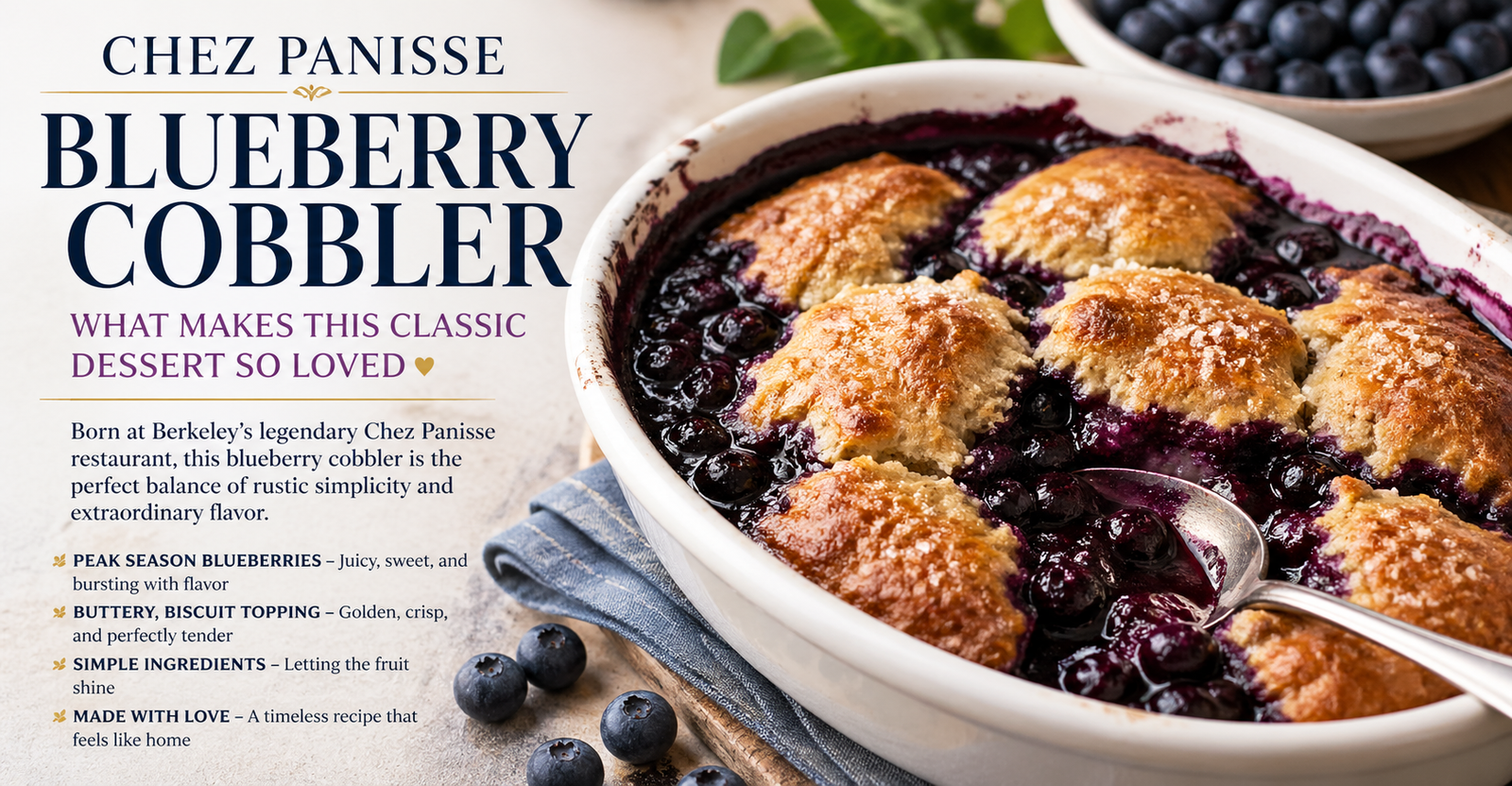
Chez Panisse blueberry cobbler is one of those desserts that proves simple food can still feel special. It does not need a long list of ingredients, a complicated technique, or a dramatic presentation. Its charm comes from ripe blueberries, a light biscuit topping, and the kind of quiet confidence that has always defined Chez Panisse.
At its heart, this is a fruit-first dessert. The berries are not buried under too much sugar or hidden beneath a heavy crust. They stay juicy, bright, and deeply flavorful. The topping is buttery and tender, but it leaves enough space for the blueberry juices to bubble up around the edges.
That balance is exactly why home bakers still search for Chez Panisse blueberry cobbler. It feels rustic, but not careless. Simple, but not plain. Familiar, but somehow elegant.
Chez Panisse blueberry cobbler is loved because it lets fresh fruit do most of the work. The recipe is built around fresh blueberries, a small amount of sugar, a little flour for thickening, and a soft biscuit-style topping made with cold unsalted butter and heavy cream.
Instead of covering the fruit completely, the dough is placed over the berries in small rounds or patties. As the cobbler bakes, the berries soften, burst, and turn jammy. The topping becomes golden and tender, while the fruit bubbles through the gaps.
The result is a warm summer dessert that tastes like blueberries first, not sugar.
To understand why this cobbler is so loved, it helps to understand Chez Panisse itself.
Chez Panisse opened in Berkeley, California, in 1971, led by Alice Waters. The restaurant became closely tied to California cuisine, seasonal cooking, and the farm-to-table movement. Its food philosophy has always been straightforward: start with the best ingredients, treat them with care, and do not overcomplicate them.
That same idea shows up clearly in Chez Panisse blueberry cobbler.
The dessert does not try to transform blueberries into something unrecognizable. It respects them. The recipe depends on ripe berries, gentle sweetness, and a topping that supports the fruit instead of stealing the spotlight.
That is what gives the cobbler its restaurant-level appeal. It tastes polished because the ingredients are allowed to speak clearly.
The most important ingredient in this dessert is not the topping. It is the blueberries.
For the best version, fresh, ripe berries make a big difference. Good blueberries have natural sweetness, a little acidity, and enough juice to create a soft, bubbling filling. When they bake, they collapse slightly and release their liquid, turning into a warm, jammy layer under the biscuit dough.
Because the recipe does not use a heavy amount of sugar, the quality of the berries matters more. If the blueberries are sweet and flavorful, the cobbler tastes bright and balanced. If they are flat or underripe, the dessert may need a small adjustment, such as a little extra sugar or a touch of lemon juice.
That low-sugar approach is part of the appeal. Many cobblers taste more like syrup than fruit. Chez Panisse’s blueberry cobbler keeps the sweetness restrained, so the berries remain the main flavor.
The topping is one of the reasons this cobbler stands out from other blueberry cobbler recipes.
It is not a cake batter poured over fruit. It is not a crumble topping. It is closer to a tender biscuit topping, made from all-purpose flour, baking powder, kosher salt, sugar, cold butter, and heavy cream.
The technique matters. The butter should stay cold and be worked into the dry ingredients until the mixture looks like coarse meal. Then the cream is added just until the dough comes together.
The goal is not a perfectly smooth dough. In fact, overworking it can make the topping tough. A slightly rough dough gives the cobbler a better texture: soft inside, lightly crisp at the edges, and golden on top.
The dough is shaped into small rounds and placed over the fruit. This creates open spaces where the berries can bubble through. That is why the finished cobbler looks so inviting. You see the golden topping and the deep blue-purple fruit together.
One reason people love Chez Panisse blueberry cobbler is that it does not overwhelm the fruit with sugar.
This is a very Chez Panisse idea. When fruit is at its best, it does not need much help. A little sugar brings out the berries’ natural sweetness, but too much can flatten the flavor.
A lightly sweetened cobbler also feels more versatile. It can be served after dinner without feeling heavy. It can work at a summer lunch, a cookout, a picnic, or a quiet weekend meal. It pairs beautifully with cream or ice cream because the dessert itself is not overly sugary.
That restrained sweetness is what makes the cobbler feel both old-fashioned and modern.
The baking method is simple, but there are a few signs to watch for.
The cobbler is usually baked in a moderate oven until the topping is golden and the fruit juices are bubbling thickly around it. The bubbling is important. It tells you the berries have released their juices and the filling has had time to thicken.
If the topping browns too fast but the fruit is not bubbling, the cobbler may need a little more time. If the fruit is bubbling but the topping still looks pale, it may need a few extra minutes to develop color.
A good finished cobbler should have:
Golden brown topping
Bubbling blueberry juices
Tender biscuit texture
Jammy fruit filling
Lightly crisp edges
Soft, juicy berries
After baking, it helps to let the cobbler cool slightly. This gives the juices time to settle so the filling is not too runny when served.
This cobbler is best served warm, but it does not need much decoration.
The classic options are simple:
Heavy cream
Whipped cream
Vanilla ice cream
Sour cream
Crème fraîche
Vanilla ice cream gives the dessert a classic warm-and-cold contrast. Heavy cream keeps it more rustic and lets the berries stay front and center. Crème fraîche or sour cream adds a tangy note that works beautifully with sweet berries.
For a summer dinner, warm cobbler with a scoop of ice cream is hard to beat. For a quieter dessert, a spoonful of cold cream may be even better.
Fresh berries are ideal for Chez Panisse blueberry cobbler, especially when they are in season. But frozen blueberries can still work if that is what you have.
The main difference is moisture. Frozen blueberries release more liquid as they bake, which can make the filling looser. To help with that, you can bake the cobbler a little longer or add a small touch more flour to the fruit mixture.
You do not always need to thaw frozen berries first. If you bake them from frozen, expect the cobbler to take a bit more time in the oven. The key is to look for bubbling juices and a fully baked topping.
Fresh berries will usually give a brighter texture, but frozen berries can still make a comforting dessert.
A simple dessert can still go wrong if a few details are missed.
The beauty of this cobbler is the fresh fruit flavor. Too much sugar can make the filling taste heavy and dull. Start with restraint, then adjust only if your berries are very tart.
The biscuit topping should be handled gently. Once the cream is added, mix only until the dough comes together. Overmixing can make the topping dense or tough.
Cold butter helps create a tender, flaky texture. If the butter softens too much before baking, the topping can lose some of its lightness.
The topping should leave gaps. Those open spaces allow the berry juices to bubble up and thicken. They also give the cobbler its rustic look.
Freshly baked cobbler smells amazing, but it benefits from a short rest. Letting it cool slightly helps the filling set.
The easiest way to make a Chez Panisse-inspired blueberry cobbler is to focus on ingredient quality rather than extra tricks.
Use the best berries you can find. Visit a farmers market if possible. Look for berries that taste sweet, bright, and fully ripe. Use good butter and real cream. Keep the sugar modest. Let the fruit lead.
You can add a little lemon zest if you want brightness, but you do not need to change much. The dessert is loved because it is already balanced.
The goal is not to make the cobbler fancy. The goal is to make it honest.
Home bakers keep coming back to Chez Panisse blueberry cobbler because it feels reliable and rewarding.
It does not require special equipment. It does not demand pastry skills. It does not ask you to roll dough, blind bake a crust, or decorate anything. Yet the finished dessert feels generous and beautiful.
It also has that rare quality of being casual enough for family and good enough for guests. You can bring it to the table in the baking dish, spoon it into bowls, and let everyone choose cream or ice cream.
That kind of dessert never really goes out of style.
More than anything, this cobbler tastes like summer.
It captures the moment when blueberries are ripe, markets are full, and a warm fruit dessert feels exactly right. The berries stain the filling deep blue. The topping turns golden. The kitchen smells like butter, fruit, and sugar.
That is the quiet magic of this recipe. It takes something ordinary, a bowl of berries, and turns it into something memorable without making it complicated.
The best Chez Panisse desserts often feel effortless, but that effortlessness comes from restraint. They do not hide behind heavy frosting, elaborate plating, or too many flavors.
Chez Panisse blueberry cobbler follows that same pattern. It is built from simple parts: fruit, sugar, flour, butter, cream, and heat. But when those parts are handled well, the result feels complete.
That is why the dessert has lasted. It respects the season. It respects the fruit. It gives the baker just enough technique to make something comforting and elegant.
Chez Panisse blueberry cobbler is loved because it does not try too hard. It lets fresh blueberries stay at the center, uses just enough sugar to support them, and finishes with a tender biscuit topping that turns golden in the oven.
Its appeal comes from the same philosophy that made Chez Panisse famous: use good ingredients, keep the method simple, and trust the season.
For home bakers, that is the real lesson. You do not need to overwork a summer dessert. Start with ripe berries, handle the dough gently, serve it warm with cream or vanilla ice cream, and let the fruit do what it does best.