
 By Admin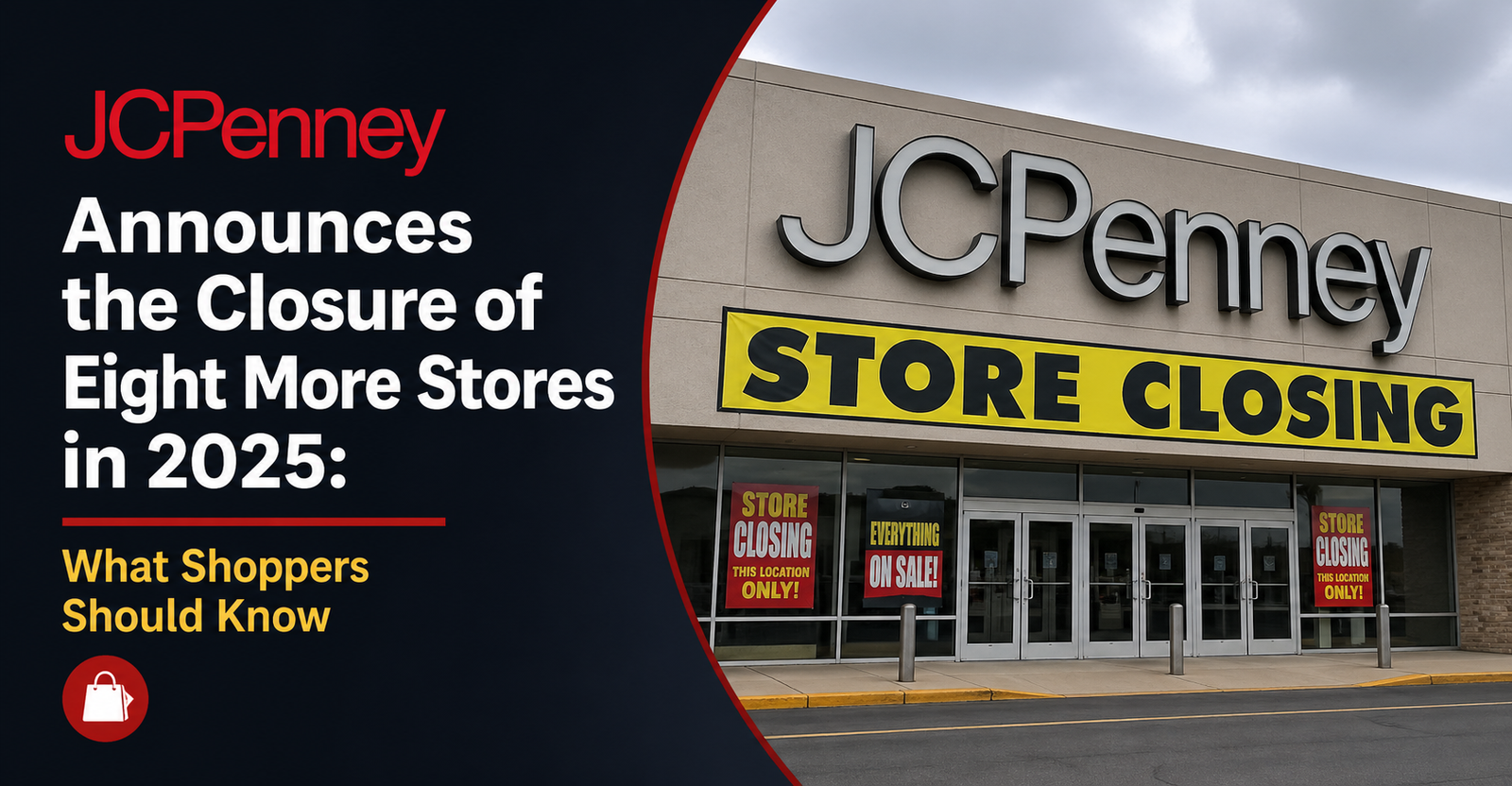
JCPenney announced the closure of eight more stores in 2025, adding another chapter to the long-running changes across America’s department store industry. For shoppers, the news naturally raises a few questions: which stores are closing, when will they close, why is this happening, and does it mean JCPenney is in bigger trouble?
The short answer is that JCPenney is closing a small group of stores across eight states by mid-2025. The company has framed the closures as targeted decisions tied to factors like expiring leases, market changes, and other business considerations. It is not the same as a full shutdown of the chain.
That distinction matters. JCPenney still operates hundreds of stores and continues to serve customers through its online store. Still, for shoppers in the affected areas, the closures are real and will change where they shop for clothing, home goods, beauty items, jewelry, shoes, and seasonal sales.
The news that JCPenney announces the closure of eight more stores in 2025 means eight locations are expected to close by the middle of the year. These stores are spread across California, Colorado, Idaho, Kansas, Maryland, North Carolina, New Hampshire, and West Virginia.
The closures represent only a small part of JCPenney’s overall store base. Reports have noted that the chain still has more than 650 stores, so eight closures do not mean the retailer is going out of business.
For customers, the most important thing is to check whether their local store is on the list, pay attention to closing dates, and handle returns, rewards, online orders, and gift cards before the store shuts its doors.
The eight JCPenney store closures announced for 2025 include the following locations:
The Shops at Tanforan
San Bruno, California
1122 El Camino Real
The Shops at Northfield
Denver, Colorado
8568 E. 49th Ave.
Pine Ridge Mall
Pocatello, Idaho
4201 Yellowstone Ave.
West Ridge Mall
Topeka, Kansas
1821 SW Wanamaker Road
Westfield Annapolis Mall
Annapolis, Maryland
1695 Annapolis Mall Road
Asheville Mall
Asheville, North Carolina
3 S Tunnel Road
Fox Run Mall
Newington, New Hampshire
50 Fox Run Road
Charleston Town Center
Charleston, West Virginia
401 Lee Street E.
If you shop at one of these stores, it is a good idea to visit the store page, call ahead, or check local announcements for exact closing dates, store hours, and any clearance or liquidation sale details.
The main reasons tied to the JCPenney store closures 2025 are practical business factors. These include expiring leases, local market conditions, changes in shopping behavior, mall traffic, and the cost of keeping certain stores open.
Not every closure means a store failed badly. Sometimes a retailer reaches the end of a lease and decides not to renew. Sometimes the surrounding mall has lost traffic. Sometimes the store no longer fits the company’s long-term plans.
For department stores, this kind of decision has become more common. Retailers are looking closely at their physical locations and asking whether each store still makes sense based on rent, sales, staffing, local demand, and customer habits.
In JCPenney’s case, the company has said it does not plan to significantly reduce its store count. That suggests these closures are more of a targeted adjustment than a broad retreat.
No, JCPenney is not going out of business based on this closure announcement.
The retailer is closing eight stores, but it still operates hundreds of locations across the United States. It also continues to sell through its website and digital shopping channels.
That said, it is understandable why shoppers ask the question. JCPenney filed for Chapter 11 bankruptcy in 2020 during the pandemic and later emerged from bankruptcy with new ownership support. Since then, many shoppers have watched the company closely whenever closure news appears.
But eight store closures in 2025 should not be confused with a chainwide shutdown. It is a limited closure list.
A better way to read the news is this: JCPenney is trimming specific stores while trying to keep the broader business stable.
The closures also raised questions because JCPenney became part of Catalyst Brands after combining with Sparc Group in 2025.
Reports have said the eight closures are not directly tied to the Catalyst Brands merger. Instead, the closures were described as decisions connected to leases, market changes, and business conditions.
Catalyst Brands is connected to a larger brand portfolio that includes names such as JCPenney, Aéropostale, Brooks Brothers, Eddie Bauer, Lucky Brand, and Nautica. For shoppers, that corporate change may sound complicated, but the closure list itself appears to be about specific store-level decisions rather than a dramatic new downsizing plan.
If your local JCPenney is on the closing list, do not wait until the final week to handle important shopping tasks. Closing stores can get busy, inventory can become limited, and some services may change as the final date gets closer.
Here are a few practical steps:
Check return and exchange deadlines
Use or confirm your JCPenney gift cards
Review your JCPenney Rewards account
Pick up any pending online orders
Ask about store pickup or ship-to-store orders
Check whether salon or optical appointments are affected
Confirm final sale rules during closing sales
Look for the nearest open JCPenney location
Save receipts for anything bought during the closing period
If you have a return, it is best to handle it early. During a closing sale, some items may be marked final sale, which can limit returns or exchanges.
Most store closures usually come with some form of clearance sale, closing sale, or liquidation sale, but the details can vary by location.
Shoppers often expect deep discounts right away, but closing sales usually happen in stages. Early discounts may be modest, while deeper markdowns may come later when selection is already picked over.
If you want the best selection, shop earlier. If you want the lowest possible price, you may need to wait, but you risk missing the item you wanted.
Common closing sale categories may include:
Apparel
Shoes
Home goods
Jewelry
Beauty products
Bedding
Small appliances
Seasonal items
Fixtures, if sold near the end
Before buying, check whether the item is returnable. Closing sales often have stricter rules.
For most shoppers, JCPenney gift cards should still be usable at other JCPenney stores and online unless the company announces different terms. Since JCPenney is not shutting down entirely, gift cards are not limited only to closing stores.
The same general idea applies to JCPenney Rewards. Customers should still be able to use rewards through open locations or online, but it is smart to check expiration dates and account details.
If your nearby store is closing, use your rewards sooner rather than later, especially if you prefer shopping in person.
If you have an online order being sent to a closing store, check its status carefully. Store pickup, ship-to-store, and curbside services may change as the closing date approaches.
Customers should:
Track order emails
Confirm pickup deadlines
Call the store if pickup is delayed
Avoid sending future orders to a closing location
Choose home delivery or another nearby store when possible
Once a store enters the final stage of closing, services may become limited. Planning ahead can help avoid confusion.
For JCPenney employees, store closures can be stressful. A closing location affects store associates, managers, salon workers, warehouse support, and other retail staff tied to that store.
In some cases, employees may be able to transfer to nearby stores. In other cases, they may need to look for new work. The impact depends on location, staffing needs, company policy, and whether another JCPenney store is close enough.
Store closures are often discussed as business decisions, but they also affect real people who work in the store every day.
Many of the affected JCPenney stores are located inside malls or shopping centers. That means the closures could also affect landlords, nearby retailers, and local shoppers.
Department stores have historically served as anchor stores, helping bring foot traffic to malls. When an anchor leaves, the mall may need to rethink the space. Some former department store locations become fitness centers, entertainment venues, medical offices, storage spaces, discount retailers, or mixed-use redevelopment projects.
For malls already dealing with lower traffic, losing a JCPenney can create another challenge. For stronger malls, the space may become an opportunity to bring in a new tenant that better matches today’s shopping habits.
The JCPenney store closures 2025 are part of a larger shift in American retail. Department stores have faced years of pressure from online shopping, changing customer habits, higher operating costs, and weaker mall traffic.
Shoppers today buy clothing, beauty products, home goods, and gifts in many different ways. Some still prefer department stores. Others use online retailers, discount chains, specialty stores, resale platforms, and big-box retailers.
That has forced legacy retailers like JCPenney, Macy’s, and others to rethink store counts, product mixes, digital sales, and mall locations.
Other retailers, including Big Lots, JoAnn, Party City, and Forever 21, have also faced store closure pressure in recent years. This does not mean every retailer is failing in the same way. It does show that physical retail is changing quickly.
Mall-based department stores face a unique problem. They depend heavily on foot traffic. If fewer people visit the mall, fewer people walk into the store. If nearby tenants leave, the shopping trip feels less useful. If customers shift to online orders, the store becomes less central to daily shopping.
At the same time, large stores are expensive to operate. They require rent, utilities, staffing, inventory, maintenance, security, and local marketing. If sales do not support those costs, a company may choose to close the location when the lease ends.
That is why expiring leases matter. A lease ending gives a retailer a natural moment to ask whether the store should continue.
Even with retail changes, many shoppers still rely on JCPenney. The chain serves customers who want affordable clothing, home goods, shoes, jewelry, bedding, window treatments, and family basics.
For many communities, JCPenney is not just another store. It may be one of the few remaining department stores in the area. Older shoppers may have decades of loyalty to the brand. Families may visit for back-to-school clothes, holiday outfits, towels, bedding, or portrait sessions.
That is why store closures can feel personal. When a location closes, shoppers lose a familiar place, not just a retail box.
If your local JCPenney is not one of the eight listed closures, there may be no immediate change. The announced list is specific, and the company has not said it is closing a large number of additional stores as part of this announcement.
Still, shoppers should keep an eye on local updates. Retailers regularly review store performance, leases, and market conditions. A store that is safe today could still face future changes if local traffic drops or business conditions change.
For now, if your store is not on the list, you can continue shopping as usual.
The most important takeaway is that this is a limited closure announcement. JCPenney is closing eight stores in 2025, but it is not shutting down the entire chain.
If your store is affected, act early. Use gift cards, handle returns, pick up online orders, check closing sale rules, and find the nearest alternate location.
If your store is not affected, the news is still worth watching because it reflects the broader shift happening across department stores and malls.
JCPenney announces the closure of eight more stores in 2025, but the move looks more like a targeted store portfolio adjustment than a full-scale collapse. The affected locations span eight states, including California, Colorado, Idaho, Kansas, Maryland, North Carolina, New Hampshire, and West Virginia.
The closures appear tied to business factors such as expiring leases, local market changes, and store-level performance. They are not being framed as a major chainwide shutdown.
For shoppers, the best step is simple: check the closure list, confirm your local store’s timeline, use rewards or gift cards wisely, and handle returns or online pickups before the final closing date.
For the retail industry, the news is another reminder that department stores are still adapting. JCPenney remains open as a national retailer, but like many legacy chains, it is being more selective about which physical stores still fit the future.