
 By Admin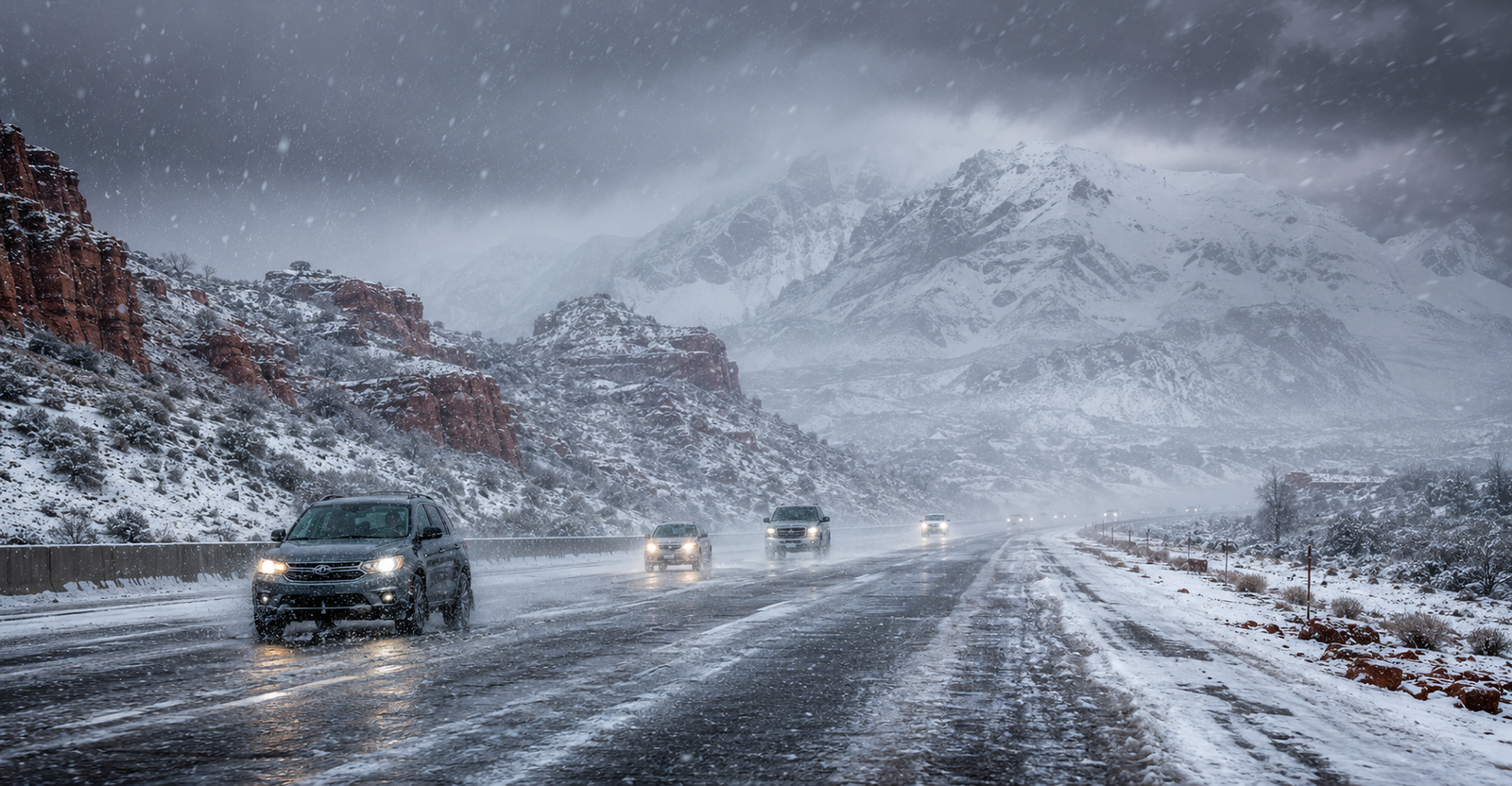
When Utah issues a road weather alert ahead of a winter storm, it means drivers should expect travel conditions to change quickly. Roads that look fine early in the morning can become snowy, slushy, icy, or slow-moving within a short time, especially when a cold front pushes through the state.
The Utah Department of Transportation, better known as UDOT, uses road weather alerts to warn drivers about storms that could affect highways, canyon roads, mountain passes, and busy commute routes. These alerts are not only for heavy blizzards. They can also be issued for lighter snow if timing, wind, freezing temperatures, or road coverage could create dangerous travel.
In one recent alert, UDOT warned that many northern Utah roads could see winter-related travel problems, with widespread snow showers, light to moderate road snow, and a burst of moderate to heavy snow expected later in the morning into early afternoon. The alert also highlighted canyon and mountain routes where several inches of snow could cover roads.
A UDOT road weather alert is meant to give drivers time to prepare before roads become difficult. Utah weather can change fast because of the state’s mix of valleys, mountains, canyons, desert highways, and high-elevation routes. A storm may bring rain to one area, slush to another, and heavy snow just a few miles up the road.
That is why a road weather alert matters. It tells commuters, truck drivers, ski traffic, school runs, and long-distance travelers to check conditions before leaving. UDOT’s weather team updates the UDOT Traffic website and app around the clock with traffic, congestion, road weather, crashes, and construction impacts. UDOT also says its weather group coordinates with the National Weather Service and maintenance teams to prepare for weather events.
For drivers, the message is simple: do not wait until you are already sliding on the road to take the storm seriously.
A Utah winter storm can create different problems depending on where you are driving. In the valleys, the biggest issue may be slush, wet snow, or icy bridges. In the mountains, drivers may face heavier snow, low visibility, traction restrictions, and slower traffic. On open highways, wind can make conditions worse by blowing snow across the road.
During the recent road weather alert, UDOT listed several major routes that could see weather-related travel issues, including I-15, I-80, I-84, I-215, I-70, US-89/91, US-40, US-6, US-189, US-191, SR-190, and SR-210. Gusty winds were also expected to affect roads such as I-80 through Tooele County, with gusts near or above 50 mph mentioned in the alert.
That kind of alert does not mean every road will be terrible all day. It means drivers should be ready for changing conditions and slower travel.
Winter storms are especially dangerous when they arrive during the morning commute. Drivers may be half-awake, traffic is heavy, school buses are moving, and everyone is trying to get somewhere on time. If snow begins falling while roads are still cold, crashes can happen quickly.
The first few hours of a storm can be tricky because roads may shift from wet to slick without much warning. Bridges, overpasses, ramps, and shaded areas can freeze faster than normal pavement. Even a small amount of snow can reduce traction when traffic is heavy.
This is why UDOT and local officials often urge drivers to slow down, leave early, or delay travel when possible. A winter commute is not the time to drive as if roads are dry.
Utah’s canyon roads and mountain routes are often the first places drivers feel the full impact of a winter storm. Roads such as Big Cottonwood Canyon, Little Cottonwood Canyon, Parleys Canyon, and other high-elevation routes can become snow-covered while lower areas are still only wet.
UDOT’s recent alert specifically included SR-190 Big Cottonwood Canyon and SR-210 Little Cottonwood Canyon among routes likely to see weather-related travel issues. These canyon routes are popular with skiers, snowboarders, resort workers, and winter recreation visitors, so storms can create both safety problems and long traffic delays.
The safest choice is to check road status before heading up a canyon, make sure your vehicle meets traction requirements, and avoid assuming all-wheel drive alone makes you safe.
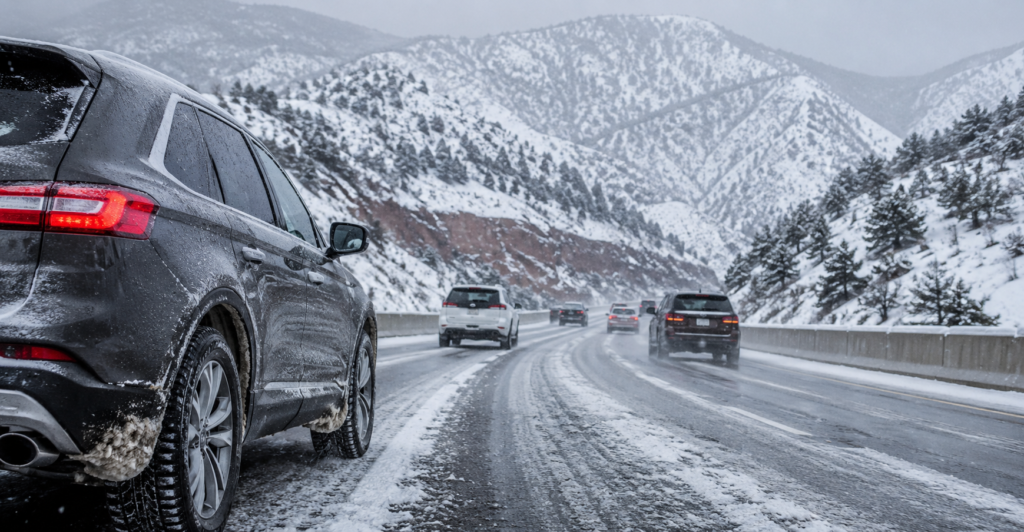
Utah’s traction law can require drivers to use proper winter tires, chains, snow socks, or other traction devices during severe winter driving conditions. UDOT says traction devices may be required on roads throughout Utah, including Big and Little Cottonwood Canyons. UDOT also notes that new restrictions allow traction requirements to be put in place before a storm begins.
For the Cottonwood Canyons, the rules are stricter. When the traction law is active, vehicles traveling into Big or Little Cottonwood Canyon must have tires with at least 5/32 inch tread depth, and requirements differ by vehicle type. UDOT says AWD and 4WD vehicles need M+S or snow-rated tires on all wheels at minimum, while 2WD vehicles need 3PMSF tires on all wheels or approved traction devices on the drive wheels.
UDOT also says drivers may be required to comply with traction rules up to 24 hours before a storm, and that travelers are notified through road signs, message boards, the UDOT traffic app, and social media.
When drivers see “Be Traction Law Ready”, it is a warning to prepare before entering canyon roads. It does not mean you should start thinking about chains after you are already stuck in a line of cars. It means your vehicle should be ready before you leave home.
For many Utah drivers, that means checking tire tread, confirming winter tire ratings, packing chains or snow socks if needed, and making sure you understand which wheels need traction devices. UDOT also recommends keeping fuel, snacks, water, and a phone charger in the vehicle for winter canyon travel because there are no gas stations in either Big or Little Cottonwood Canyon.
This matters because one underprepared vehicle can block a canyon road, slow emergency response, and create long delays for everyone behind it.
Before driving during a winter storm, the best habit is to check UDOT Traffic. UDOT says statewide road weather conditions, more than 1,200 cameras, over 200 message boards, and in-road and roadside sensors are available through the UDOT Traffic website and app.
Drivers should look at:
Road cameras to see actual pavement conditions.
Traffic alerts for crashes, closures, and delays.
Weather impacts for snow, slush, ice, and wind.
Message boards for traction rules or warnings.
Canyon updates before heading to ski areas.
Alternate routes in case a major highway slows or closes.
A weather app can tell you snow is coming, but road cameras show what is actually happening on the pavement.
Winter storms can affect nearly any Utah road, but some routes are more likely to show up in road weather alerts. These include major interstates, mountain passes, canyon roads, and long rural highways.
Common routes to watch include I-15, I-80, I-84, I-70, I-215, US-6, US-40, US-89, US-191, SR-190, and SR-210. In the recent alert, UDOT listed many of these roads as likely to experience weather-related travel issues.
Drivers should pay special attention to:
I-80 near Parleys Canyon and Tooele County
I-15 through northern and central Utah
Canyon roads leading to ski resorts
High-elevation passes
Rural stretches where services are limited
Bridges, ramps, and shaded road sections
These are the places where winter storms can quickly turn a normal drive into a slow, stressful trip.
Many drivers focus only on how many inches of snow are expected. But road conditions depend on more than snowfall totals. A small amount of snow can still cause problems if it falls during rush hour, lands on cold pavement, comes with strong wind, or arrives after a warm period that leaves roads wet before temperatures drop.
Wind can also make winter driving worse. In the recent Utah alert, UDOT warned that strong gusts could affect routes such as I-80 through Tooele County, with gusts near or above 50 mph.
That kind of wind can push vehicles, reduce visibility, blow snow across lanes, and make high-profile vehicles harder to control. For semi-trucks, box trucks, trailers, and RVs, wind can be just as serious as snow.
A winter storm kit does not need to be complicated, but it should cover the basics. Before driving in a Utah road weather alert, keep these items in your vehicle:
Warm coat, gloves, and hat
Blanket
Phone charger or power bank
Water and snacks
Ice scraper and snow brush
Small shovel
Flashlight
Jumper cables
Traction devices if required
Basic first-aid supplies
Full or mostly full fuel tank
This is especially important for canyon travel, rural routes, and long drives across the state. If traffic stops or a crash blocks the road, you may be sitting longer than expected.
When roads are snowy or icy, the best move is to drive smoothly. Quick braking, sharp steering, and sudden acceleration can all cause a loss of traction.
Useful winter driving habits include:
Slow down before curves and ramps.
Increase following distance.
Brake gently and earlier than usual.
Avoid cruise control on slick roads.
Keep headlights on.
Do not crowd snowplows.
Give trucks and buses extra room.
Avoid sudden lane changes.
Pull over safely if visibility drops too much.
The goal is not to “beat” the storm. The goal is to arrive safely.
During a winter storm, UDOT crews work to keep roads open, but they need room. Snowplows may travel slower than normal traffic, spread salt or treatment materials, and make repeated passes over the same route. Passing too closely or cutting in front of a plow can be dangerous.
Drivers should stay back, avoid driving in a plow’s blind spot, and remember that the road in front of the plow is usually worse than the road behind it. If a plow is moving slowly, there is a reason.
Patience is part of winter driving. A few extra minutes behind a plow is better than sliding off the road.
Not every trip is worth taking during a road weather alert. If UDOT is warning about snow-covered highways, canyon impacts, strong winds, or difficult commute conditions, delaying travel may be the safest option.
Consider waiting if:
You do not have winter tires or traction devices.
You are driving through a canyon during active snowfall.
Your route includes high passes or rural highways.
You are towing a trailer.
Visibility is poor.
You are tired or uncomfortable driving in snow.
Your trip is not urgent.
Utah drivers are used to winter weather, but that does not mean every storm should be treated casually.
Visitors often underestimate Utah winter roads, especially when heading to ski resorts. A rental car may not have the right tires. All-wheel drive may help with acceleration, but it does not guarantee good braking on ice. Chains may be required, and canyon enforcement can turn around vehicles that are not properly equipped.
UDOT specifically advises out-of-town visitors renting vehicles for winter travel to check with the rental company and confirm the vehicle has 4WD or AWD and the correct tires for winter conditions.
If you are visiting Utah during a winter storm, check your route before leaving the airport or hotel, not after reaching the canyon mouth.
A Utah road weather alert ahead of a winter storm matters because it gives people time to make better decisions. It is not meant to scare drivers. It is meant to keep traffic moving, reduce crashes, help snowplow crews work, and stop underprepared vehicles from creating bigger problems.
The alert tells drivers to check conditions, plan extra time, prepare their vehicle, and think carefully about mountain and canyon travel. It also reminds everyone that Utah winter driving can change by elevation, time of day, and storm track.
Before the next Utah winter storm, check your tires, fill your tank, charge your phone, pack basic supplies, and review UDOT Traffic before driving. If you are heading into Big or Little Cottonwood Canyon, make sure you understand the traction law before you reach the checkpoint.
A road weather alert is not just another weather headline. It is a practical warning that roads may become difficult, slow, or unsafe. For Utah drivers, the best response is simple: plan ahead, slow down, check live road conditions, and give yourself more time than you think you need.