
 By Admin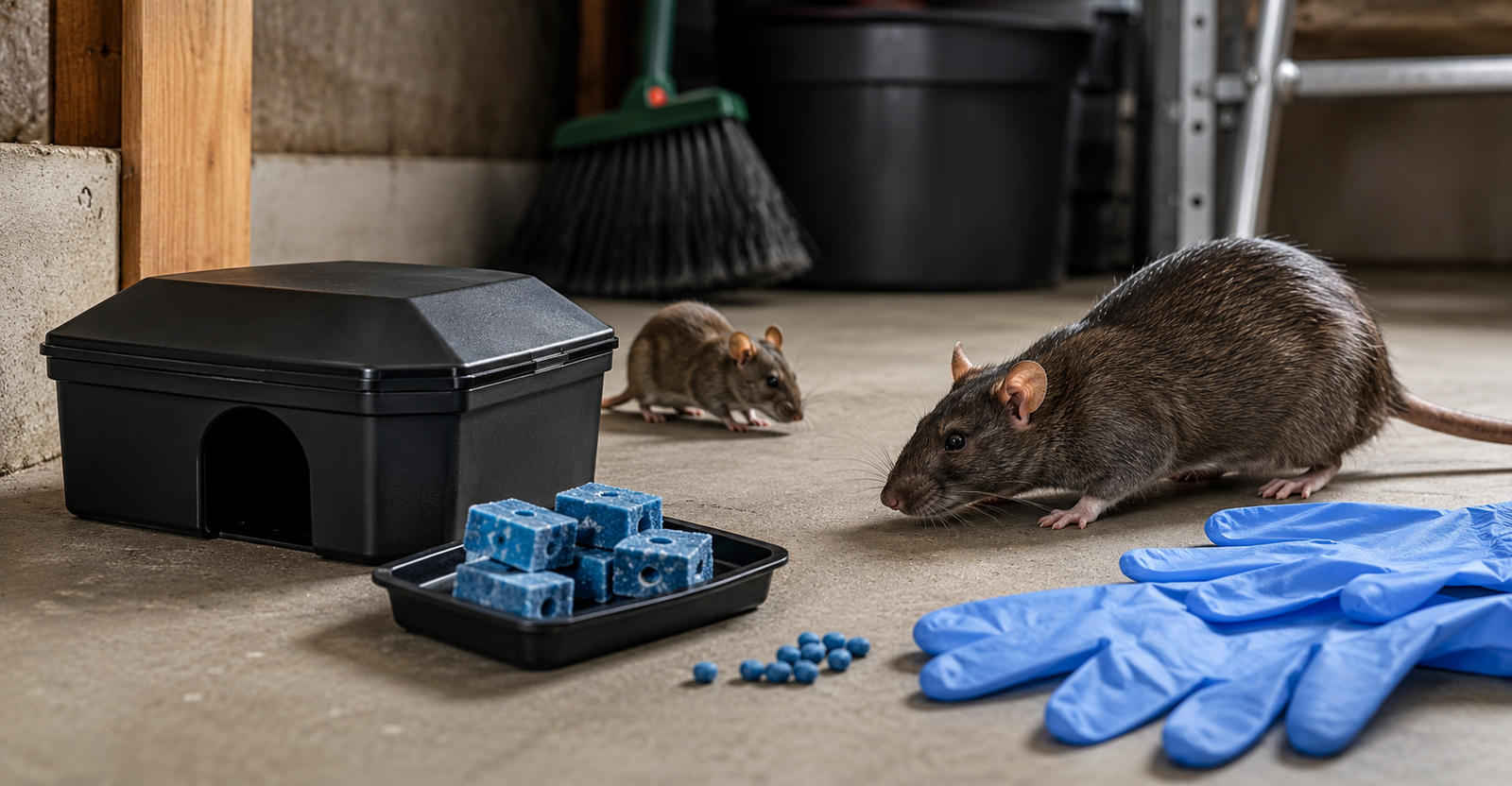
When mice or rats show up in the house, most people want the fastest fix. That is why searches like what is the best mouse poison, top rated mouse killer, and best mouse bait poison are so common. Nobody wants droppings in the kitchen, scratching inside the walls, chewed wires, or food bags ripped open overnight.
The honest answer is this: the best mouse poison for most homes is not simply the strongest poison. It is an EPA-registered, ready-to-use bait station used exactly as the label says, combined with sealing entry points and removing food sources.
For many indoor mouse problems, snap traps may even be the better first step. The CDC recommends traditional snap traps for reducing rodent populations around the home and says poison or bait stations should be considered when mouse or rat infestations persist.
That does not mean rodenticide never works. It can be effective. But choosing the best poison for mice means thinking about safety, placement, pets, children, odor from dead rodents, and whether you are dealing with mice, rats, or both.
The best mouse poison for a typical homeowner is a ready-to-use bait station that is labeled for mice, marked for indoor or indoor/outdoor use, and registered for residential rodent control.
In the U.S., consumer rodenticide products are sold as ready-to-use bait stations with block or paste bait. The EPA says consumer-market rodenticides currently use active ingredients such as bromethalin, chlorophacinone, cholecalciferol, diphacinone, warfarin, or zinc phosphide, while second-generation anticoagulants such as brodifacoum and bromadiolone are not allowed in consumer bait products.
So if someone asks what is the best rat and mouse poison, the practical answer is:
Choose a labeled, tamper-resistant bait station designed for the rodent you have, and avoid loose poison, unlabeled bait, or anything placed where children, pets, or wildlife can reach it.
A mouse killer can mean poison, snap traps, electric traps, enclosed traps, or professional pest control. A mouse poison specifically means rodenticide bait.
That difference matters. If you want the top rated mouse killer for a kitchen, pantry, bedroom, or apartment, poison may not always be the smartest option. A poisoned mouse can die inside a wall, ceiling, cabinet void, or crawl space, creating smell and cleanup problems. A trap lets you remove the rodent.
If you have repeated activity, a garage problem, a shed issue, or outdoor rodent pressure near a building, a bait station may make more sense. The EPA says ready-to-use bait station products are labeled for indoor use or indoor/outdoor use within 50 feet of buildings, depending on the product and bait station design.
The best mouse bait poison should have three things: a secure station, a clear label, and the right use case.
Look for:
- EPA registration or local pesticide approval
- Ready-to-use bait station
- Clear label for mice, rats, or both
- Indoor or outdoor use instructions
- Tamper-resistant design if children or pets are nearby
- Weather-resistant station for outdoor use
- Block or paste bait secured inside the station
- Clear disposal instructions
Avoid bait that is loose, unmarked, homemade, or taken out of its original station. The EPA says bait in consumer products must be secured within the bait station that comes in the retail package.
That is the safest way to think about the most effective mouse poison: not just what kills rodents, but what controls them without creating a bigger safety problem.
People often mix up food bait and poison bait. If you are using traps, the best bait for mice and rats is usually a small amount of attractive food. The CDC says chunky peanut butter or mutton fat works well for snap traps and recommends placing traps along walls where rodents travel.
For poison bait, the “bait” is already part of the rodenticide product. You should not add peanut butter, food, oil, or anything else to a poison station unless the product label specifically allows it. Adding food can attract pets, children, or non-target animals and may make the setup less safe.
So when people ask what is the best mouse bait, the answer depends on the method:
| Method | Best Bait Choice |
| Snap traps for mice | Small amount of peanut butter or similar food bait |
| Snap traps for rats | Pre-baiting may help because rats are cautious |
| Poison bait station | Use only the bait supplied with the labeled product |
| Severe infestation | Professional inspection and rodent control plan |
The most effective mice poison is the one rodents actually eat and the one you can use safely in your home. Stronger is not always better.
Some rodenticides work after one feeding, while others may require multiple feedings. Anticoagulant rodenticides interfere with blood clotting, while non-anticoagulants such as bromethalin or cholecalciferol work in different ways. These products can also be dangerous to pets if eaten directly or indirectly through poisoned rodents.
That is why homeowners should not chase the “strongest” bait without considering risk. The best rodenticide for mice is the one that matches your situation and is used exactly according to the label.
If you have pets, small children, chickens, outdoor cats, wildlife, or a dog that chews everything, poison becomes a much more serious decision.
The best mouse and rat bait for a home depends on whether you are dealing with mice or rats.
Mice are small, curious, and can enter through very tiny gaps. The CDC says mice can fit through a hole about the width of a pencil, around 1/4 inch or 6 millimeters. Because of that, poison alone rarely solves the problem. If you do not seal the gaps, new mice can keep coming in.
Rats are more cautious. They may avoid new objects at first, so traps or bait stations can take longer to work. The CDC notes that rats tend to fear new things and may need pre-baiting with traps before they approach them.
For both mice and rats, the best plan is:
- Find droppings, gnaw marks, runways, and entry points.
- Remove food sources.
- Seal holes and gaps.
- Use traps or bait stations safely.
- Monitor activity until signs stop.
This is stronger than simply buying the best mouse rat poison and hoping the problem disappears.
Outdoor rodent control needs extra care. Poison placed outside can affect pets, birds of prey, cats, dogs, and wildlife. Dead or dying rodents can also be eaten by other animals.
If you use rodenticide outside, choose a product labeled for outdoor use and use it only in the supplied bait station. The EPA says outdoor above-ground applications require tamper-resistant bait stations in many cases, especially where children, pets, or non-target wildlife could access the bait.
For outdoor areas, do not scatter bait. Do not place loose blocks under sheds, behind fences, or around gardens. Do not use poison near pet feeding areas, chicken coops, bird feeders, or places where wildlife regularly passes.
For many yards, the better first move is cleanup: remove pet food, secure garbage, trim overgrowth, reduce clutter, and block access to shelter. The CDC recommends sealing gaps, keeping food and garbage tightly sealed, and cleaning outdoor areas to reduce rodent attraction.
The best mouse and rat killer is not the same for every house.
Use traps first if:
- You see only a few droppings
- The activity is indoors
- You have pets or children
- You want to avoid dead rodents in walls
- You need to confirm when the rodent is caught
- You are dealing with a kitchen or bedroom area
Consider bait stations if:
- Rodent activity continues after trapping
- You have repeated activity in garage, attic, crawl space, or shed areas
- You can place stations safely and legally
- You can check them regularly
- The product is labeled for your situation
- You are comfortable following pesticide instructions exactly
Call a professional if:
- You hear activity inside walls every night
- Rats are visible during the day
- Droppings keep appearing after a week of trapping
- Pets or children make bait unsafe
- There is a strong odor from a dead rodent
- You suspect a large infestation
- Rodents are entering through rooflines, drains, or structural gaps
The CDC says if trapping does not resolve an infestation, you could consider a poison bait station or seek professional help.
Be very careful with poison in kitchens. A kitchen has food, dishes, cabinets, appliances, and high human contact. For most kitchens, traps are usually cleaner and easier to monitor.
If rodenticide is used in or near a kitchen, it should be inside a proper bait station and placed only where children and pets cannot access it. The EPA warns that rat and mouse poison can harm people, children, and pets if misused, and says pesticides should not be stored next to food or pet food.
For kitchen mouse problems, focus on:
- Sealing gaps behind appliances
- Storing food in glass, metal, or thick plastic containers
- Cleaning crumbs and grease
- Removing pet food overnight
- Checking under sinks and behind cabinets
- Using traps along walls and behind appliances
Poison may kill mice, but sanitation and exclusion stop the next group from entering.
People usually want to know what works fast because they are tired of seeing signs of rodents. A poison may be effective, but it does not always feel fast because rodents need to find it, eat it, and leave.
A faster plan is usually a combination of:
- Traps in active areas
- Sealed entry holes
- No open food
- Proper bait stations where needed
- Daily monitoring
- Quick disposal of dead rodents
The EPA also recommends promptly removing and disposing of dead rodents to reduce the risk of accidental poisoning of pets or wildlife that might eat them.
If you only place poison but leave gaps open, the infestation can continue.
The worst option is any poison used carelessly. Even a good product becomes risky if it is placed badly.
Avoid:
- Loose bait in open areas
- Pellets scattered around the house
- Unlabeled bait blocks
- Poison near pet bowls
- Poison inside food cabinets
- Bait where children can reach
- Outdoor bait without a proper station
- DIY poison mixtures
- Products not labeled for your country or location
- Using rat bait where only mouse control is needed without reading the label
In the U.S., pelleted baits are no longer permitted in rodenticide products targeted for consumer markets, and consumer products are ready-to-use bait stations with block or paste bait.
That is important because old advice online may still mention loose pellets or bait trays. Modern safe use is much stricter.
Rodenticide is still poison. Treat it seriously.
Before using any best mouse bait poison product:
- Read the full label before opening it.
- Use only the supplied bait station.
- Keep it away from children and pets.
- Store unused product in a locked place.
- Never store pesticide near food or pet food.
- Do not transfer bait into another container.
- Do not touch bait with bare hands.
- Check stations regularly.
- Remove dead rodents quickly.
- Contact poison control or a veterinarian immediately if accidental exposure happens.
Many rodenticides are toxic to pets. MSD Veterinary Manual notes that pets may be poisoned by eating baits directly or by eating poisoned rodents, and early veterinary treatment gives the best chance of recovery.
If you have pets, the best option may be not using poison indoors at all. Enclosed snap traps, professional exclusion, and careful sanitation may be safer.
If you still choose rodenticide, use only a tamper-resistant bait station labeled for homes with child and pet safety protection. Even then, “tamper-resistant” does not mean “risk-free.” Dogs can chew. Cats can reach tight spaces. Children can move things.
For pet homes, a safer rodent plan usually looks like this:
- Seal entry points first
- Remove pet food at night
- Use traps in protected areas
- Place traps where pets cannot reach
- Avoid loose bait entirely
- Use professional pest control for larger infestations
The most effective mouse poison is not worth it if it creates a poisoning emergency for a dog or cat.
Use this simple guide:
| Situation | Better Choice |
| One or two mice indoors | Snap traps and sealing gaps |
| Mice in garage or shed | Traps plus sealed food storage |
| Repeated mouse activity | Ready-to-use bait station or pest pro |
| Rats outdoors near building | Professional advice or labeled outdoor bait station |
| Pets or small children | Avoid poison when possible; use protected traps |
| Heavy infestation | Licensed pest control |
| Dead rodent smell risk | Traps are usually better than poison |
| Unknown rodent type | Identify mouse vs rat first |
This approach works better than asking only for the best mice poison or best rat mice poison. The right method depends on the building, the rodent, and the risk.
A mouse problem usually starts with access. If the house has gaps around pipes, doors, vents, foundations, cabinets, or utility lines, more mice can enter even after poison works.
The CDC recommends looking inside and outside the home for gaps and sealing them. Small holes can be filled with steel wool and caulk, while larger holes may need metal, cement, hardware cloth, or metal sheeting.
That is why professional pest control often talks about exclusion. Poison kills rodents that are already active, but exclusion stops the next ones.
If you want the best mouse and rat bait strategy, use a step-by-step plan instead of relying on one product.
Start by checking where the activity is strongest. Look behind the stove, under the sink, behind the fridge, in the pantry, in the garage, in the attic, and along walls. Clean droppings carefully using safe cleanup guidance, then remove food sources.
Next, seal gaps. Even a small opening can be enough for mice.
Then use traps in active areas. If the problem continues, consider a labeled bait station or call a professional. This gives you control without jumping straight to poison in the wrong place.
Not every rodent problem needs poison. Many homes improve quickly with:
- Snap traps
- Enclosed traps
- Sealing holes
- Removing clutter
- Storing food properly
- Securing garbage
- Removing pet food overnight
- Trimming vegetation near the house
- Fixing garage door gaps
Ultrasonic devices, strong smells, and homemade repellents are often less reliable than exclusion and trapping. If mice have food, warmth, and entry points, they usually do not leave just because a smell bothers them.
If someone asks what is the best rat and mouse poison, the most responsible answer is:
The best option is a labeled, ready-to-use bait station used only as directed, but traps and exclusion should usually come first inside the home.
For homeowners, the best mouse poison is not about buying the strongest chemical. It is about choosing the safest effective method for the situation. In many cases, that means snap traps, sealing entry points, better food storage, and only using rodenticide when the infestation persists or when a professional recommends it.For a small indoor mouse problem, traps may be the top rated mouse killer in practical terms. For ongoing activity in garages, sheds, or protected outdoor areas, a properly labeled bait station may be the better tool. For rats, large infestations, or any situation involving pets and children, professional help is often the safest route.