
 By Admin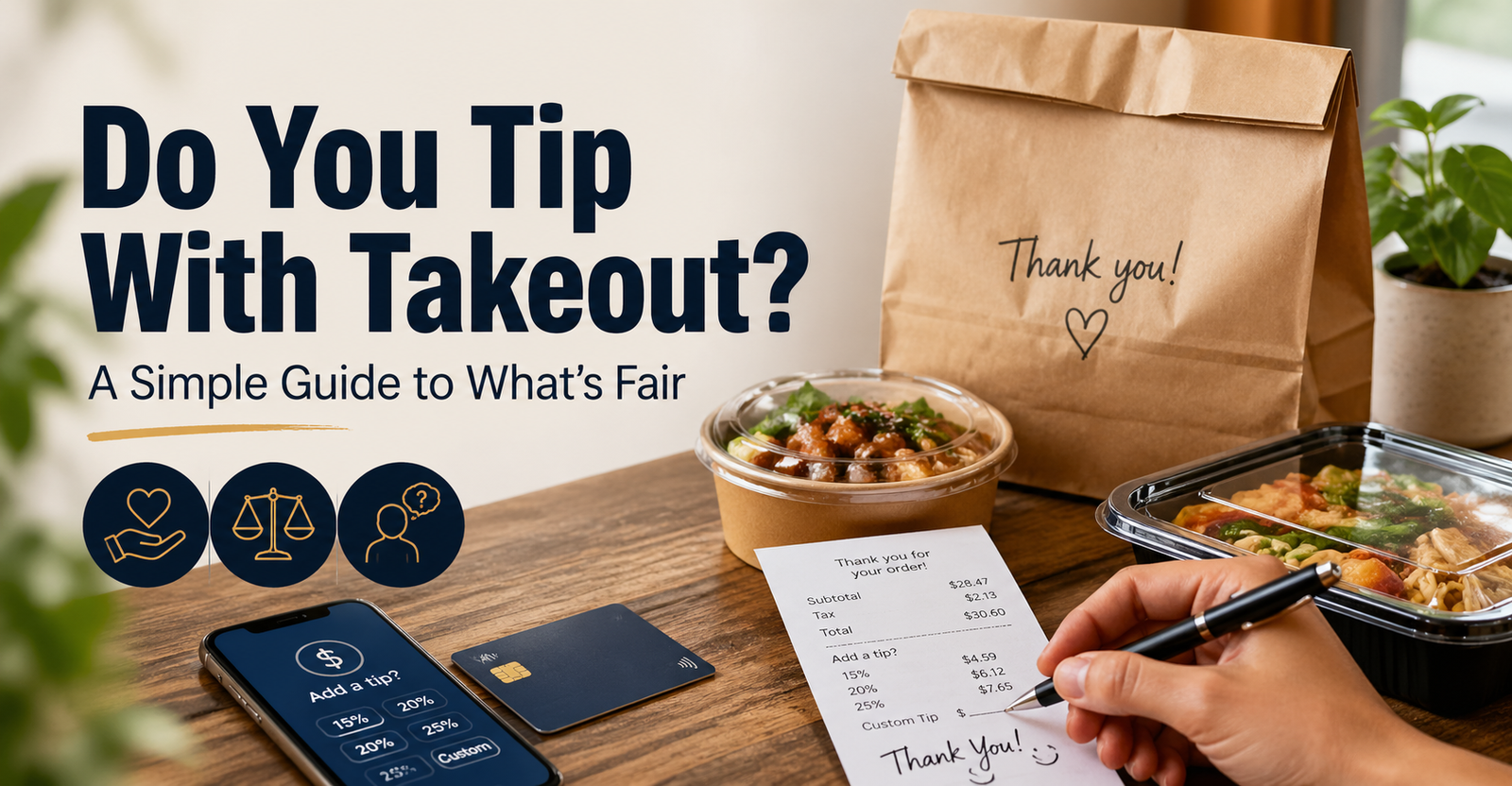
If you have ever picked up food and frozen at the payment screen, you are not alone. The question “do you tip with takeout” has become more common because almost every checkout screen, tablet tip prompt, and online order form now asks for a tip before you even get your food.
The simple answer is this: tipping for takeout is usually optional, but it is often appreciated. You do not need to treat a basic pickup order the same way you would treat full dine-in service, but there are many situations where leaving a small tip is fair and thoughtful.
A takeout order still requires work. Someone may answer the phone, check the order, pack the food, add sauces, bag utensils, handle payment, and make sure everything is ready when you arrive. At the same time, you are not getting table service, drink refills, a server checking on you, or someone cleaning your table after the meal.
That is why takeout tipping etiquette is not always black and white. The fairest approach is to look at the effort involved.
For a basic to-go order, a tip is not required in the same way it is expected at a sit-down restaurant. But if the order came from a full-service restaurant, involved special requests, was large, or required curbside pickup, leaving a tip is a kind gesture.
A good general rule is:
For simple takeout, tip around 5% to 10% if you want to show appreciation. For larger or more complicated orders, 10% to 15% is more reasonable. For curbside pickup, bad weather, holiday rushes, or very large orders, tipping closer to 15% to 20% can make sense.
You do not have to tip 20% every time you pick up a sandwich or coffee. A small cash tip, a few dollars, or even rounding up the total can be enough for a simple order.
The confusion mostly comes from modern payment systems. Many restaurants, cafés, bakeries, and fast casual spots now use digital tip screens from systems like Toast, Square, or Clover. These screens often show preset options like 15%, 20%, and 25%.
That can feel awkward, especially when the employee is standing right there.
This is where tip fatigue comes in. Customers feel like they are being asked to tip everywhere, even for counter service, self-service, or very small purchases. The screen can make people feel guilty, even when tipping is optional.
But here is the key thing to remember: a tablet tip prompt is a prompt, not a rule. You are allowed to choose a custom amount. You are also allowed to select no tip when the service is minimal.
The goal is not to feel pressured. The goal is to be fair.
There is no single perfect number, but these ranges are easy to follow:
$1 to $2 for a small order, coffee pickup, bakery item, or simple counter order
5% to 10% for a basic takeout order from a restaurant
10% to 15% for a normal restaurant pickup where staff packed and checked your meal
15% to 20% for large orders, complicated orders, curbside pickup, bad weather, or holiday service
If you are ordering one drink or a small snack, a dollar or two is enough if you want to tip. If you are picking up a full family meal from a local restaurant, a percentage tip is usually better.
For example, if your order is $20 and simple, a $2 tip is fair. If your order is $80 and includes multiple meals, sauces, sides, and substitutions, $8 to $12 feels more appropriate.
A tip makes the most sense when the staff did more than just hand you a bag.
You should consider tipping when your pickup order includes:
A large order
A big family meal, office lunch, party platter, or catering-style order takes extra time to organize. Staff may need to check multiple containers, label bags, separate hot and cold items, and make sure nothing is missing.
Special requests
If you asked for substitutions, allergy notes, extra sauce, dressing on the side, separate containers, or custom packaging, a tip is a nice way to recognize the extra effort.
Curbside pickup
With curbside pickup, someone may have to leave the restaurant, bring the food to your car, confirm your order, and sometimes handle payment outside. That is more service than basic counter pickup.
Bad weather
If staff are running orders outside in rain, snow, heat, or cold, tipping is thoughtful.
Holiday shifts
On busy days like Christmas Eve, New Year’s Eve, Thanksgiving week, or major local events, restaurant workers are often dealing with long lines and heavy order volume.
Friendly or standout service
If the person was patient, helpful, careful, or fixed a problem quickly, a small gratuity is a good way to say thank you.
It is also okay not to tip in some situations. That does not automatically make you rude.
You may skip the tip when the order is extremely simple, the service is fully self-serve, or the restaurant adds a clear service charge that already covers staff support.
For example, if you grab a pre-packed item from a counter, pay at a screen, and no one does anything beyond ringing it up, tipping is optional. The same can apply at some fast food restaurants, coffee shops, or fast casual restaurants where there is no extra service involved.
It may also be fair not to tip if the service was poor, the order was handled carelessly, or the staff ignored a clear issue. Tipping is meant to reward service, not fix bad service.
Still, if your order came from a full-service restaurant where a server, host, or bartender had to pause their regular work to pack and manage takeout orders, a small tip is usually appreciated.
It helps to separate takeout pickup, curbside pickup, and food delivery because they are not the same.
With takeout pickup, you go inside, pick up your food, and leave. This usually deserves a smaller tip, often 5% to 10%, or a few dollars.
With curbside pickup, someone brings the food to your car. Since that includes extra service, 10% to 15% is more reasonable.
With food delivery, the driver brings the order to your home, uses their car, spends time on the road, deals with traffic, and may rely heavily on tips. Delivery usually deserves a higher tip than basic takeout. A delivery driver should not be tipped the same as someone who simply hands over a bag at the counter.
This is why DoorDash, Uber Eats, and Grubhub orders should be treated differently from restaurant pickup.
For fast food takeout, tipping is usually optional. Many people do not tip at places like McDonald’s, Subway, or similar quick-service restaurants unless the order is large or the staff went out of their way.
For coffee shop pickup, a small tip is common but not required. If you order a simple black coffee, skipping the tip is understandable. If your order includes several drinks, customizations, pastries, and careful packaging, leaving $1 to $2 is a nice gesture.
At a local café, small tips can matter more because staff may depend on them as part of their regular income. If you visit often and like the service, tipping occasionally helps build goodwill.
For takeout, it is usually best to tip on the pre-tax subtotal. That means you calculate the tip before sales tax, delivery fees, packaging fees, or other added charges.
For example, if your food subtotal is $40 and the total becomes $46 after tax and fees, base your tip on the $40. A 10% tip would be $4.
This is especially helpful when receipts include a service fee, delivery fee, packaging fee, or to-go fee. Those charges can make the final total higher, but they may not go directly to the worker who packed your order.
A service fee is not always the same as a tip. Some restaurants use service fees to cover wages, packaging, operations, or online ordering costs. Others may share part of it with staff.
If the receipt says automatic gratuity, that usually means a tip has already been included. If it says service charge, to-go fee, or packaging fee, it may not go directly to the employee.
When in doubt, ask politely: “Does this fee go to the staff?” That gives you a better idea of whether an extra tip is needed.
If a restaurant already adds a clear staff gratuity, you do not need to tip again unless you want to.
The digital tip screen is one of the biggest reasons people ask, “do you tip with takeout?” It can feel uncomfortable when the screen flips around and the suggested choices start at 18% or 20%.
You do not have to choose one of the preset amounts. Use the custom option when you want to leave a smaller tip. For example, if the screen shows 20%, 25%, and 30%, but you only picked up a simple order, choosing a custom $2 tip is completely fair.
The screen is designed to make tipping easy, but it should not make you feel trapped.
Yes, many restaurant workers do appreciate takeout tips. Even though you are not sitting at a table, someone still handles your food after it leaves the kitchen.
Depending on the restaurant, takeout orders may be managed by a server, host, cashier, bartender, or dedicated to-go staff. In some places, those workers also share tips with kitchen staff, back-of-house staff, or other team members through a tip pool.
Takeout can also interrupt regular service. A server may be taking care of dine-in guests while also answering phones, packing bags, checking receipts, and dealing with pickup customers. That does not mean you owe them a huge tip, but it explains why even a small tip can be appreciated.
Here is an easy way to think about it:
No tip or round up: Very basic counter pickup, self-service, or poor service
$1 to $2: Coffee, bakery pickup, small snack, or tiny order
5% to 10%: Simple restaurant takeout
10% to 15%: Standard restaurant pickup with packaging and order checking
15% to 20%: Large order, curbside pickup, special requests, bad weather, or holiday rush
This keeps tipping fair without making every pickup order feel like a full dine-in meal.
The best rule is simple: match the tip to the effort.
If someone only handed you a bag, a small tip or no tip may be fine. If someone carefully packed a large order, handled special requests, checked for accuracy, added condiments, brought it to your car, or helped during a busy rush, tipping is a thoughtful move.
So, do you tip with takeout? You can, and often it is a good idea. But you do not need to feel pressured into tipping 20% every time a screen asks.
For most takeout orders, a fair tip is somewhere between 5% and 10%. For bigger, more complicated, or more service-heavy orders, 10% to 15% is a better range. For curbside pickup, bad weather, holidays, or truly standout service, tipping more is a kind way to recognize the extra work.
In the end, takeout tipping etiquette is about balance. Be fair to the staff, be honest about the service you received, and do not let an awkward screen make the decision for you.