
 By Admin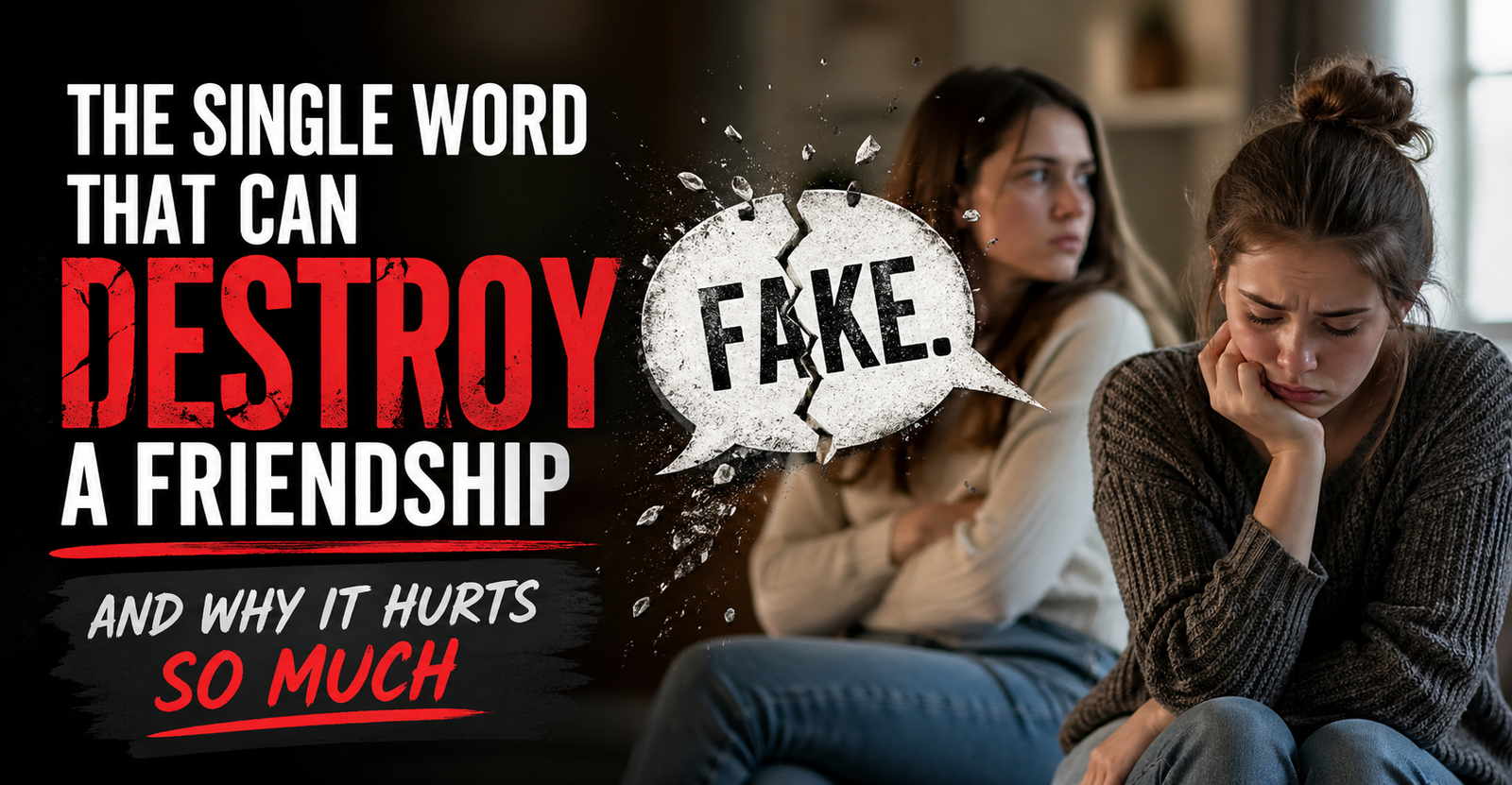
Friendships rarely fall apart because of one dramatic moment. More often, they weaken through tone, timing, and the small things people say when they are irritated, tired, or no longer trying very hard. That is why this topic hits such a nerve. People are not just wondering whether one word can really damage a friendship. They are trying to understand why a simple response can feel so sharp, so cold, and so unforgettable.
If there is one word most often pointed to here, it is “whatever.” A recent piece from TIME, written by Angela Haupt, spotlighted that exact word as the kind of response that can quietly wreck closeness between friends. The reason is not just the word itself. It is what the word communicates. It tells the other person, “I’m done with this, and I’m not interested in your feelings anymore.”
On paper, “whatever” looks small. It is only one word. In real life, though, it can sound dismissive, rude, and emotionally careless. It often shows up when someone wants to shut down a conversation instead of dealing with it honestly. That is exactly why it stings.
When a friend says “whatever,” the message underneath is usually much louder than the word itself. It can sound like:
- your point does not matter
- your feelings are not worth my time
- I do not care enough to explain myself
- I would rather end this than work through it
That is why the word hurts so much. Friendship depends on emotional safety. Even when friends disagree, they still want to feel heard, respected, and taken seriously. “Whatever” takes all of that and throws it aside in a second. TIME framed it as a dismissive, conversation-ending response, and that is what makes it so damaging.
The obvious version of “whatever” is angry. It comes out during an argument, with a sharp tone, and everybody in the room knows it was meant to wound. But sometimes the more painful version is the flatter one. No raised voice. No scene. Just a cold little word that makes the other person feel foolish for caring.
That is often the moment when friendship damage begins. Not because the word is magical, but because it creates emotional distance. Instead of saying, “I’m upset,” or “I need a minute,” it tells the other person they are no longer worth the effort of a real response.
People can recover from disagreements. They can even recover from heated conversations. What is harder to recover from is contempt. Once someone feels looked down on or brushed off, trust gets weaker.
A lot of friendship pain comes down to respect. Friends do not need perfect communication, but they do need a basic sense that the relationship matters. That is why dismissive language hits harder in friendship than it might in a casual interaction.
With a stranger, “whatever” is annoying. With a close friend, it can feel personal. It suggests the bond is not being protected. It replaces care with indifference.
That is also why the word tends to stay in people’s minds. They may forget the full argument, but they remember the moment they felt dismissed. The word becomes a symbol for a bigger emotional truth: “This person was not careful with me.”
While TIME focuses on “whatever,” Kira Asatryan in Psychology Today makes a different but equally interesting argument. She points to “busy” as the word that can quietly kill friendship, not because it sounds openly rude, but because it creates vagueness and distance. Her point is that “busy” often becomes a convenient shield. It keeps people at arm’s length without forcing them to say what they really mean.
That matters because it shows the deeper pattern. The most harmful words in friendship are usually not just “mean” words. They are words that signal disinterest, avoidance, or emotional withdrawal.
“Whatever” says, “I don’t care enough to keep talking.”
“Busy” can say, “I don’t care enough to make room for you.”
Different words, same wound.
This is where the topic gets more useful. If you only focus on one specific word, you miss the bigger lesson. The real problem is dismissiveness.
A friendship usually does not break because of vocabulary alone. It breaks when one person starts feeling unimportant, unseen, or emotionally pushed away. A dismissive word speeds that up because it turns a tense moment into a deeper injury.
That is why phrases like “you’re too sensitive” or “I was just joking” can also do damage. They do not just express frustration. They minimize the other person’s emotional reality. A University of Maryland piece summarizing friendship expert Marisa G. Franco’s work highlights those kinds of phrases as warning signs because they avoid accountability and make the hurt person seem like the problem.
So the heart of the issue is not whether one word is universally the worst. It is whether the word makes your friend feel dismissed.
One reason hurtful words land so hard is that friendship is supposed to be a place of mutual care. You do not need formal rules, but there is usually an unspoken expectation that both people will check in, make space, and show interest in each other’s lives.
That is why the RAFT Counseling piece by Amanda Turecek is a helpful contrast. Instead of focusing on a toxic word, it highlights the absence of caring language, especially simple check-in words like “Hey, how are you?” The point is not that those exact words save every friendship. The point is that friendship survives through signs of attention and care.
Seen that way, “whatever” hurts because it does the opposite. It does not invite. It does not reassure. It does not repair. It closes the door.
Sometimes people wonder whether it is too dramatic to say one word can destroy a friendship. The truth is, one word usually does not destroy a healthy friendship by itself. But it can expose a crack that was already there.
If a friendship is strong, one bad moment can lead to a real apology and honest repair. If the friendship is already strained, that one word can become the final proof that something has changed.
That is why people react so strongly to it. The word is not always the entire problem. Often, it confirms the problem.
A dismissive word can reveal that one person is tired of explaining, tired of caring, or no longer invested in protecting the relationship. Once that becomes clear, the hurt goes deeper than the argument itself.
The good news is that most friendship damage from language is preventable. Usually, people do not need a perfect script. They just need a better pause.
Instead of “whatever,” a healthier response might be:
- “I’m too upset to answer well right now.”
- “I need a minute.”
- “I hear you, but I need some space.”
- “I do want to talk about this, just not like this.”
- “Can we come back to this when I’m calmer?”
That kind of language still sets a boundary, but it does not strip the other person of dignity. It leaves room for the friendship to stay intact.
That is an important difference. You can be honest without being dismissive. You can be overwhelmed without being cruel. You can ask for space without making your friend feel small.
This topic gets attention because almost everyone has experienced some version of it. Most people know what it feels like to open up, care deeply, and then get hit with a response that makes them feel silly for trying. A single word can carry a lot of emotional weight when it sounds like rejection.
That is why “whatever” gets remembered. It is not just casual slang in the wrong moment. It can feel like contempt in a tiny package.And that is really the answer to the bigger question. The single word that can destroy a friendship is not dangerous because of grammar or dictionary meaning. It is dangerous because it makes someone feel dismissed, disrespected, and emotionally shut out. TIME argues that “whatever” captures that perfectly, while Psychology Today shows that softer words like “busy” can create the same kind of distance over time. Together, they point to the same truth: friendship suffers when language stops making room for care.